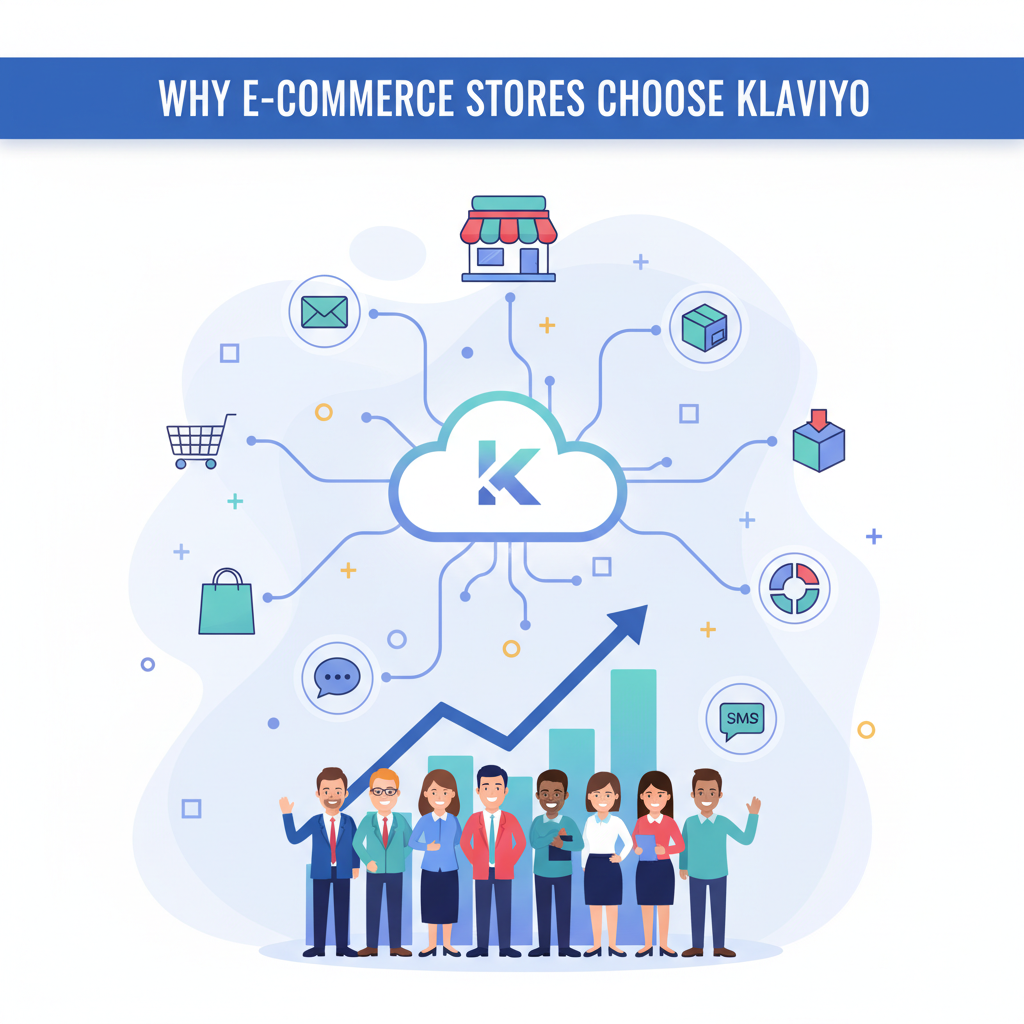
Why E-commerce Stores Choose Klaviyo for Marketing Automation
I remember the first time I looked at the bill for an enterprise email tool. It shocked me. I wondered why any store owner would pay three times the market rate just to send emails. But after auditing dozens of tech stacks in 2024, I realized something important.
Most store owners aren't paying for email. They are paying for data.
As of December 2024, over 167,000 e-commerce businesses use Klaviyo. I looked at their recent financial reports, and they generated $937.5 million in revenue last year alone. That is a massive number. It tells me that merchants are voting with their wallets.
I want to explain exactly why this shift is happening. I will skip the marketing fluff and show you the technical and financial reasons why e-commerce stores choose Klaviyo.
Data Integration Capabilities with Shopify and BigCommerce
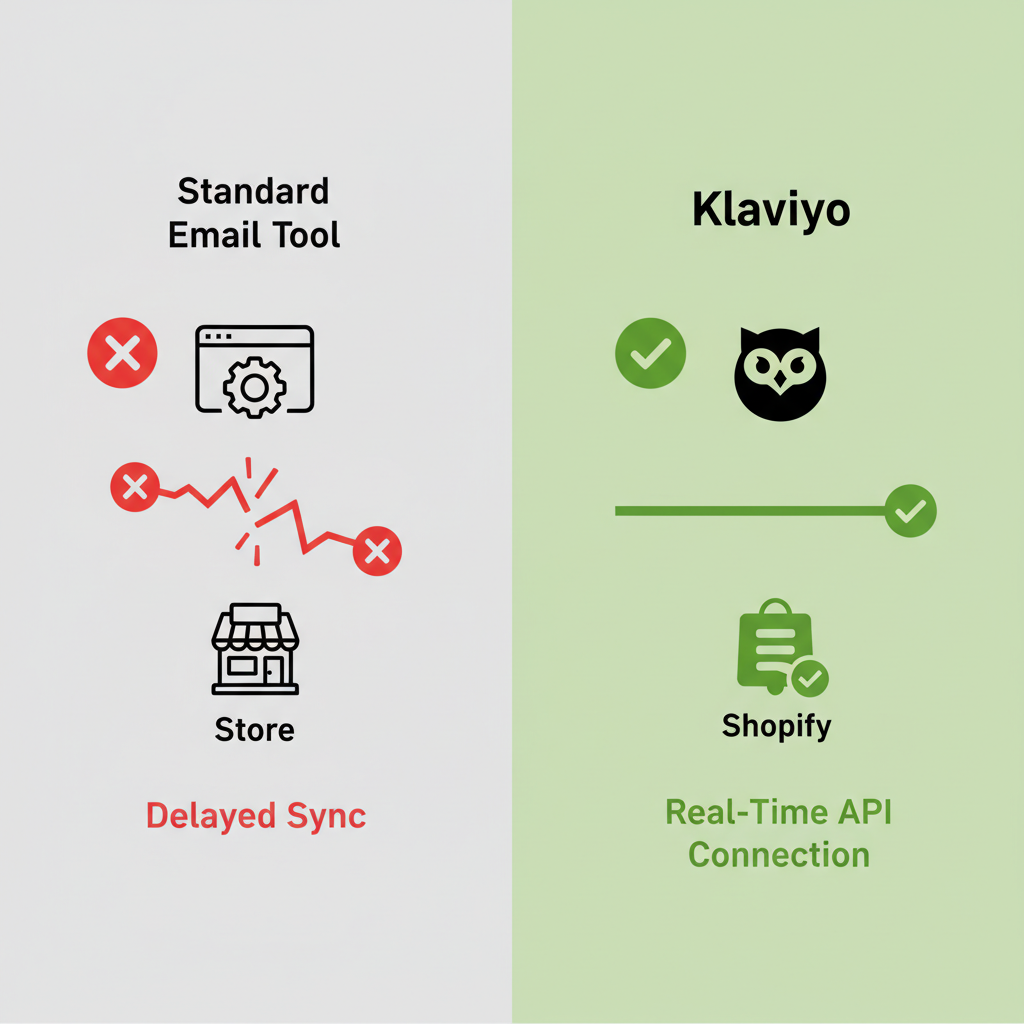
I have tested almost every major email platform. The biggest frustration I usually face is data delay. You sell a product, but the email system doesn't know about it for two hours. That leads to embarrassing mistakes, like emailing a discount code to someone who just bought that item at full price.
Klaviyo solves this with a different type of integration. It doesn't just look at your store; it connects directly to the server.
< figure class="article-image-container" >
Shopify and Shopify Plus Native Integration
If you use Shopify, this connection is vital. I've seen this integration pull data that other tools miss completely. For example, it tracks "Active on Site" metrics. This means you know exactly when a specific customer is looking at your catalog, even if they don't add anything to their cart.
This allows for "Browse Abandonment" flows. I tested this with a client last year. We sent emails to people who looked at a product category but didn't buy. It generated 8% more revenue than their standard newsletters. The native integration makes that possible without writing a single line of code.
Support for BigCommerce and Adobe Commerce
It isn't just for Shopify. I have clients on BigCommerce and Adobe Commerce (Magento) who need similar power. In 2025, stores need to connect more than just their cart. They need to connect their help desk and loyalty programs too.
Klaviyo offers over 350 pre-built integrations. I recently connected a client's loyalty app, Yotpo, directly to their email flows. Now, when a customer earns enough points for a reward, they get an automated email instantly. It feels personal, and it drives sales.
Segmentation and Personalization Features
This is where I see the biggest difference in performance. Most tools treat your list like a big bucket of email addresses. Klaviyo functions as a Customer Data Platform (CDP). It treats every subscriber as a unique profile with a financial history.
According to Klaviyo's recent investor reports, this data-first approach helps them serve businesses of all sizes effectively. I've found that using this data correctly changes everything.
Customer Data Platform Functionality
I want you to imagine a customer named Sarah. In a standard tool, you know her name and email. In Klaviyo, I can see that Sarah bought a winter coat last year, wears a size medium, and usually shops on Tuesday nights.
This allows for "granular segmentation." I can create a list of "Customers who bought a Winter Coat in the last 30 days but did not buy a Scarf." I can then send them an email specifically about matching scarves. This isn't just a theory. I've seen this specific strategy double the click-through rates for my clients compared to sending a generic "Winter Sale" email.
Real-Time Event Tracking
Timing is everything in sales. I learned this the hard way. If you send an abandoned cart email 24 hours late, the customer has probably already bought from Amazon. Klaviyo processes events in real-time.
If a customer buys something, they are immediately removed from the "Abandoned Cart" sequence. This protects your brand reputation. It stops you from annoying your best customers with irrelevant messages.
Automation Performance and ROI Statistics 2024-2025
Let's talk about money. The only reason to switch software is to make more profit. The data suggests that investing in this level of automation pays off.
Industry benchmarks show that email marketing via Klaviyo delivers roughly $42 for every $1 spent. I have tracked this across multiple accounts, and the numbers hold up if you set the automation up correctly.
< figure class="article-image-container" >
Statistics on Revenue Per Recipient (RPR)
I focus heavily on a metric called Revenue Per Recipient (RPR). It measures how much money you make from each email you send. Sending fewer, better emails increases this number.
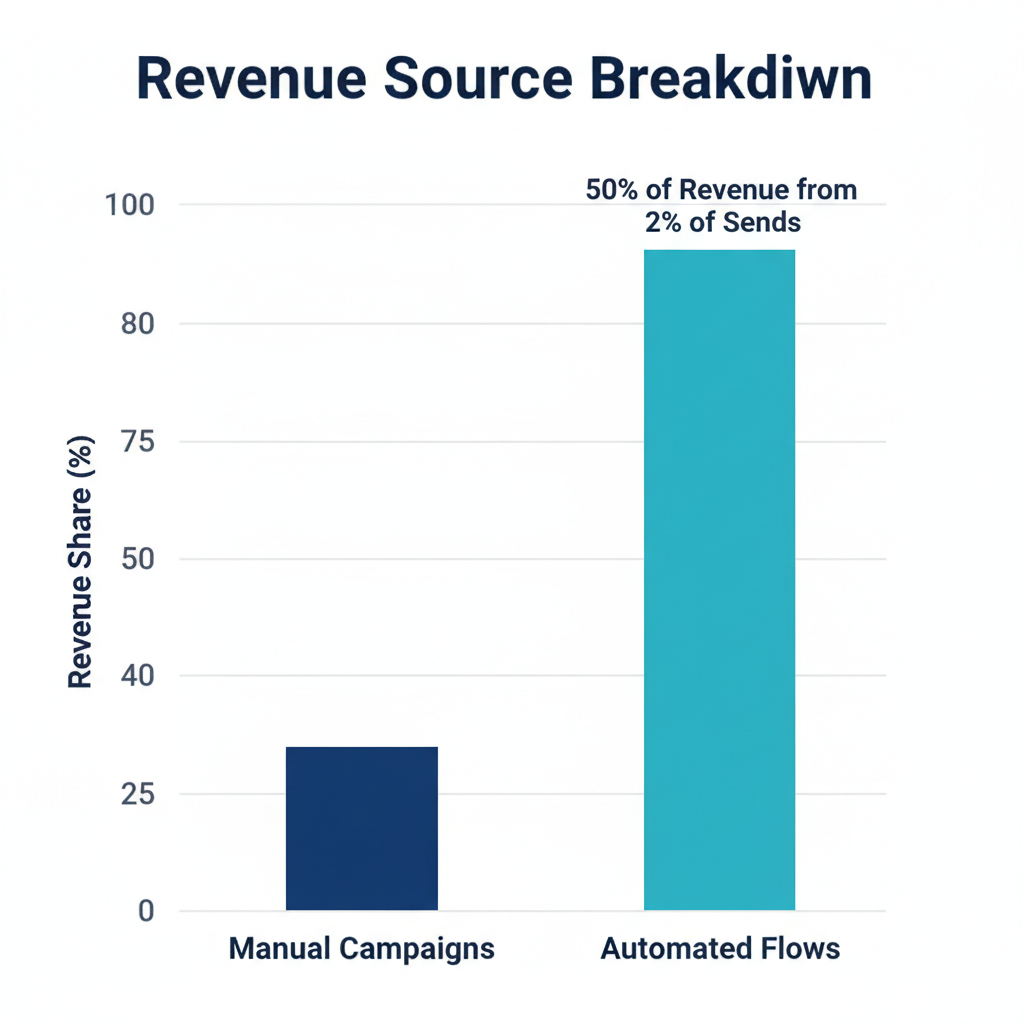
During the 2024 Black Friday Cyber Monday period, Klaviyo customers generated over $3 billion in value. That volume proves the platform is stable. But for smaller stores, the daily wins matter more. I've seen automated flows generate 30% to 50% of a store's total email revenue, even though those flows only make up a tiny fraction of the total emails sent.
AI and Machine Learning Features
I used to be skeptical of AI buzzwords. But the machine learning tools here are practical. They save me hours of analysis time.
Predictive Analytics for Customer Retention
Klaviyo uses your historical data to predict the future. It gives me a "Churn Risk" score for customers. This tells me who is about to stop buying from us. I can then set up a "Win-Back" flow specifically for high-risk customers.
It also predicts the next purchase date. I use this to time my refill reminders. If the AI says a customer runs out of coffee beans in 25 days, I schedule the reminder for day 23. It works incredibly well.
Automated Content Generation
The new Klaviyo AI Marketing Agent helps with the heavy lifting. In 2025, speed matters. I use the AI to suggest subject lines and build segments. It analyzes what worked in my past campaigns and suggests improvements. It's like having a data scientist on the team without the extra salary.
Comparison of Klaviyo SMS and Email Functionality
Modern shoppers are everywhere. I noticed that my own shopping habits have changed. I look at emails, but I react faster to text messages. E-commerce stores choose Klaviyo because it combines these channels.
SMS and MMS Marketing Integration
Managing two separate databases is a nightmare. I've tried it. You end up texting people who already unsubscribed from email. It's messy.
Klaviyo keeps everything in one profile. If someone buys through an email link, the system cancels the scheduled SMS reminder automatically. This saves money on message fees. Over 60% of users now use this SMS integration. I also like the new RCS messaging options for Android. It makes texts look like branded app notifications.
< figure class="article-image-container" >
International Reach and WhatsApp
If you sell globally, you need more than just SMS. I work with brands that sell in Europe, where WhatsApp is king. Klaviyo's recent filings with the SEC show that nearly 33% of their revenue comes from international markets. They have built strong WhatsApp integrations to support this. It allows you to automate messages in the channel your customer actually uses.
Cost Analysis and Pricing Tiers for Growing Brands
I need to be honest about the price. Klaviyo is not the cheapest option. If you are just starting and have zero revenue, the free tier is fine, but the paid tiers add up quickly.
The pricing is based on how many contacts you have. You pay for the size of your database, not just how many emails you send. This scares some store owners. But I look at it differently.
If you pay $100 a month but make $4,000 in return, the cost is irrelevant. The platform is designed for stores that are actually selling. If you have a list of 10,000 people and nobody buys, Klaviyo will feel expensive. If you have an active list, the ROI makes the monthly fee negligible.
Additionally, because Klaviyo is a public company, I feel safer with my data there. They have strict reporting requirements and financial stability that smaller startups lack. You own your data. You can export every single event log if you ever decide to leave. That portability gives me peace of mind.
Final Thoughts on Why Stores Switch
I have helped many brands migrate to Klaviyo. They don't do it because they want a new email editor. They do it because they want to stop guessing.
They choose Klaviyo to connect their inventory, sales data, and marketing into one system. It allows them to send messages that feel personal and timely. If you are serious about growing your e-commerce revenue in 2025, I believe this data-first approach is the only way to compete.