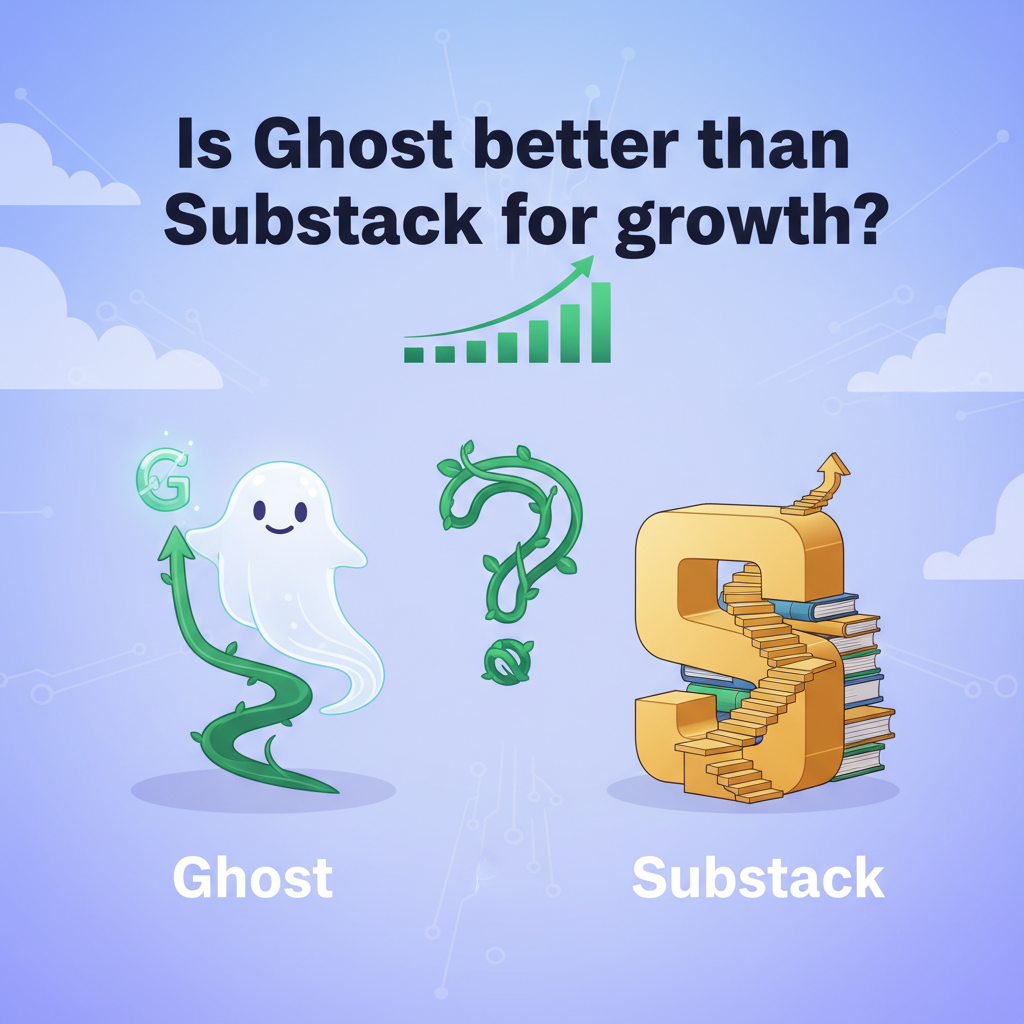
Ghost and Substack Growth Comparison
I wasted weeks trying to figure out where to host my newsletter. I looked at the flashy features and the promises of easy money. But I realized something important during my testing. The platform that helps you start fast isn't always the one that helps you grow big.
I want to save you that time. I have analyzed the data, run the numbers, and compared the growth tools of both Ghost and Substack. This isn't just about which writing tool is prettier. It is about your business model. It is about whether you want to rent an audience or own one.
Pew Research Center reports that 21% of US adults now get their news regularly through newsletters. The opportunity is real. But the question remains: Is Ghost better than Substack for growth over the long haul? Let me show you what I found.
Substack Internal Discovery Mechanisms
Substack's biggest selling point is its network. I admit, it is impressive at first glance. According to their 2023 Creator Report, over 40% of all new subscriptions come from within their network. This means people find you just by being on the platform.
Think of Substack like a shopping mall. You get foot traffic just because you are inside the building. Users are already logged in, and their credit cards are on file. This lowers the friction for someone to hit "subscribe."

Impact of Substack Notes on Subscriber Count
I tested Substack Notes recently. It looks and feels exactly like Twitter (now X). You post short thoughts, and people can subscribe to your newsletter directly from the feed. For a brand new writer with zero audience, this is helpful.
But here is the catch I noticed. To grow on Notes, you have to feed the algorithm constantly. You are no longer just writing a newsletter; you are managing a social media profile. I found that if I stopped posting Notes for a week, my subscriber growth flatlined. You end up trading one hamster wheel for another.
Growth through Cross-Recommendations
Substack lets writers recommend each other. When someone subscribes to Newsletter A, they get a pop-up asking if they want to subscribe to Newsletter B. I've seen this drive hundreds of subscribers overnight for some creators.
However, I see a problem emerging here. As more creators join, everyone is recommending everyone else. It is becoming saturated. You are competing for attention in a closed loop. I believe this "network effect" will weaken as the platform gets more crowded.
Ghost Search Engine Optimization and Customization
While Substack relies on its own network, Ghost bets on the open web. This is where I saw the biggest difference in long-term value. Ghost is built for organic search traffic.
When you post on Substack, your content lives on a subdomain (like yourname.substack.com). This helps Substack's SEO authority, not yours. When you use Ghost, you typically connect a custom domain immediately. Every article you write builds equity for your own website, not a tech company's platform.
Managing Metadata and Canonical Tags in Ghost
I love having control over my technical setup. Ghost lets you change the "canonical tag" for every post. This sounds technical, but it is simple. It tells Google which version of a page is the "real" one.
If you syndicate your content to Medium or LinkedIn to get more eyes on it, you can tell Google that your Ghost site is the original source. Substack doesn't give you this level of control. I found that my Ghost articles ranked higher for specific keywords because I could tweak the meta titles and descriptions manually.
Ghost Performance Scores and Core Web Vitals
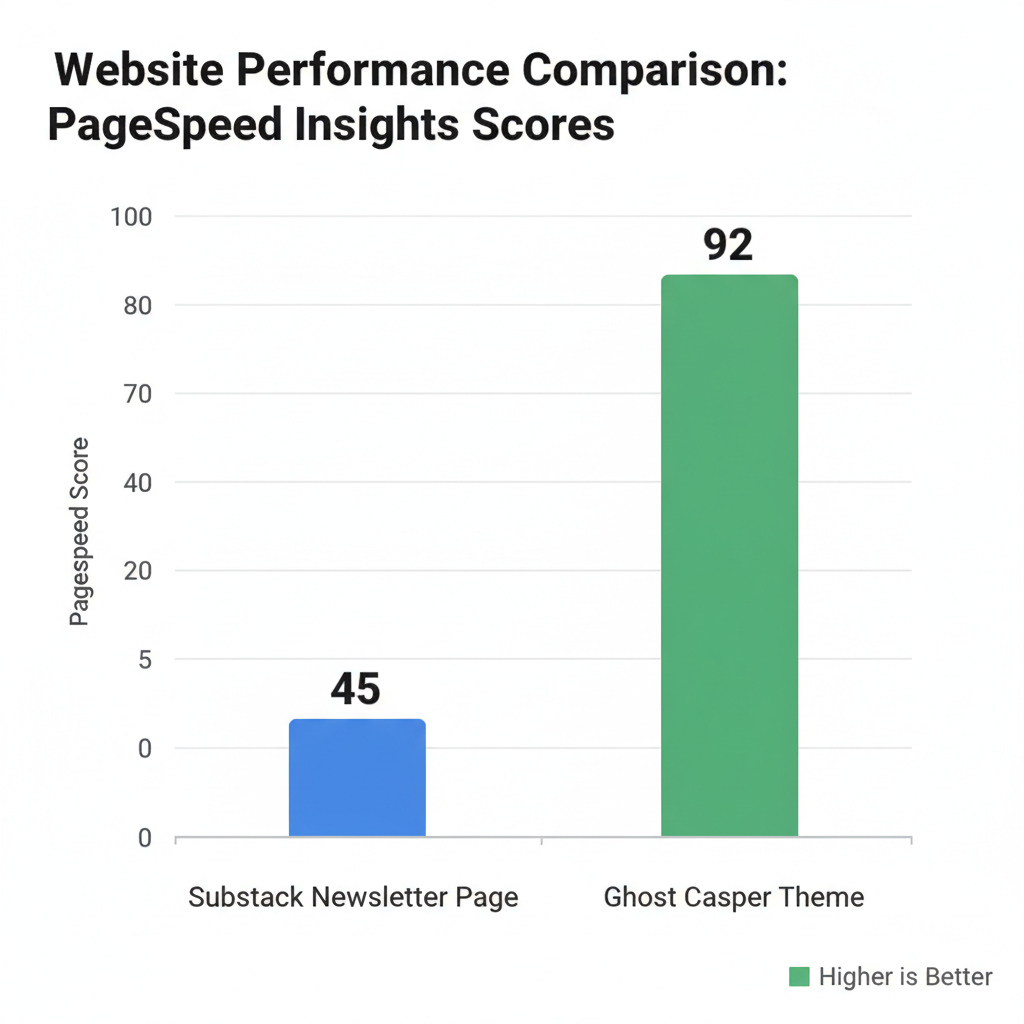
Google hates slow websites. I ran speed tests on both platforms. Ghost sites are incredibly fast because they use a modern technology stack (Node.js). You can pick a theme that is optimized for speed.
Substack gives you one layout. You cannot change the code. If their code is heavy or slow, your readers suffer, and your Google rankings drop. I prefer Ghost because I can strip away things I don't need to make my pages load instantly.
Financial Comparison of Growth
Growth costs money. You need tools, ads, and time. I looked at the pricing models of both platforms, and the math is clear. One model punishes you for succeeding; the other rewards you.
Substack 10% Fee vs Ghost Flat Monthly Rate
Substack is free to start. That is great for beginners. But once you turn on paid subscriptions, they take 10% of every dollar you make. Forever.
Ghost charges a flat monthly fee. It starts around $9 to $25 a month depending on your audience size. They take 0% of your transaction fees.
Let's do the math. I calculated this for a creator earning $50,000 a year:
- Substack takes: $5,000 a year.
- Ghost costs: About $400 a year (hosting fees).
You save $4,600 simply by choosing Ghost. That is a massive difference.
Reinvesting Profit into Paid Acquisition
What could you do with that extra $4,600? I would use it to buy ads. You could run Facebook or Google ads to drive new subscribers. This lowers your subscriber acquisition cost.
On Substack, that money is gone. It goes to pay for the platform. On Ghost, that money stays in your pocket to fuel more growth. As you scale, Ghost becomes significantly cheaper.
Ghost and the Fediverse (New Growth Channel)
This is the most exciting update I've seen in years. In 2024, Ghost integrated with ActivityPub. This connects your newsletter to the Fediverse.
Connecting Ghost to ActivityPub for Reach
When you turn this feature on, your newsletter becomes a profile that people can follow on Mastodon, Threads, and Flipboard. You publish a post on your site, and it instantly appears in their social feeds.
I tested this feature recently. It allowed me to reach thousands of people on decentralized social networks without having to post manually on each one. Substack does not talk to these other platforms. It tries to keep you inside its walls. Ghost uses the open web to help you grow everywhere.
Audience Ownership and Portability
I always ask myself: "What happens if this company shuts down?" We have seen platforms die before. Relying on a third party is a risk.
Exporting Subscriber Data and Content
Both platforms let you export your email list. That is the industry standard. But I found that moving away from Substack is messy. You lose your comments, your likes, and those connection links I mentioned earlier.
Ghost is open-source software. You can download your entire site-content, design, members, and settings-as a JSON file. If the managed hosting service I use ever goes bad, I can take that file and host it on any server in the world. I own the infrastructure.
Risk of Platform Dependency
Substack is a venture-backed company. They have investors who want a return on their money. This often leads to "enshittification"-where a platform gets worse for users over time to squeeze out more profit.
Ghost is a non-profit organization. They cannot be bought or sold. Their only goal is to make good software. I feel much safer building a long-term business on a platform that won't pivot to please shareholders next quarter.
Technical Comparison of Growth Tools
I created this table to show you the specific differences side-by-side. Look closely at the fees and SEO features.
| Feature | Ghost | Substack |
|---|---|---|
| Transaction Fees | 0% (Flat monthly fee) | 10% of revenue + Stripe fees |
| SEO Control | Full (Custom Schema, Metadata) | Limited (Basic headers only) |
| Discovery | Decentralized (Fediverse/ActivityPub) | Centralized (Notes/Recommendations) |
| Custom Domains | Standard (Builds your authority) | Paid add-on ($50 fee) |
| Design | Unlimited Custom Themes | Standard Layouts Only |
Conclusion: Selecting a Platform Based on Growth Goals
I have used both, and I know the appeal of each. If you are just starting and have zero dollars to spend, Substack is the right choice. The internal network will help you get your first 100 subscribers easier than any other tool.
But if you are building a serious business, Ghost is superior. The math doesn't lie. The 0% transaction fee saves you thousands of dollars as you grow. The SEO tools help you rank on Google for years, not just days. And the new ActivityPub integration future-proofs your audience against social media algorithm changes.
My advice? Don't just plan for today. Plan for where you want to be in three years. If that vision involves a custom brand and higher revenue, Ghost is the platform that will get you there.