Best Practices for Managing Unsubscribe Processes: The 2025 Guide to Compliance & UX
In July 2025, the 8th Circuit Court formally vacated the Federal Trade Commission's aggressive "Click-to-Cancel" rule. For many marketers, this felt like a reprieve—a moment to breathe a sigh of relief that the government wouldn't be micromanaging their offboarding flows.
But if you think that court ruling gives you permission to relax your unsubscribe process, you are walking into a trap that has nothing to do with the FTC and everything to do with your survival in the inbox.
Here’s the thing: While the lawyers argue in court, Google and Yahoo effectively became the regulators of the internet in 2024. They don't care about the 8th Circuit's opinion. They care about user experience. If you are a bulk sender and you haven't implemented RFC 8058 headers or if your spam rate creeps above 0.3%, your emails will simply vanish.
In my decade of experience helping enterprise brands fix deliverability crises, I've seen firsthand that the "Unsubscribe" button isn't an enemy—it's a pressure valve. Tighten it too much, and the whole system explodes.
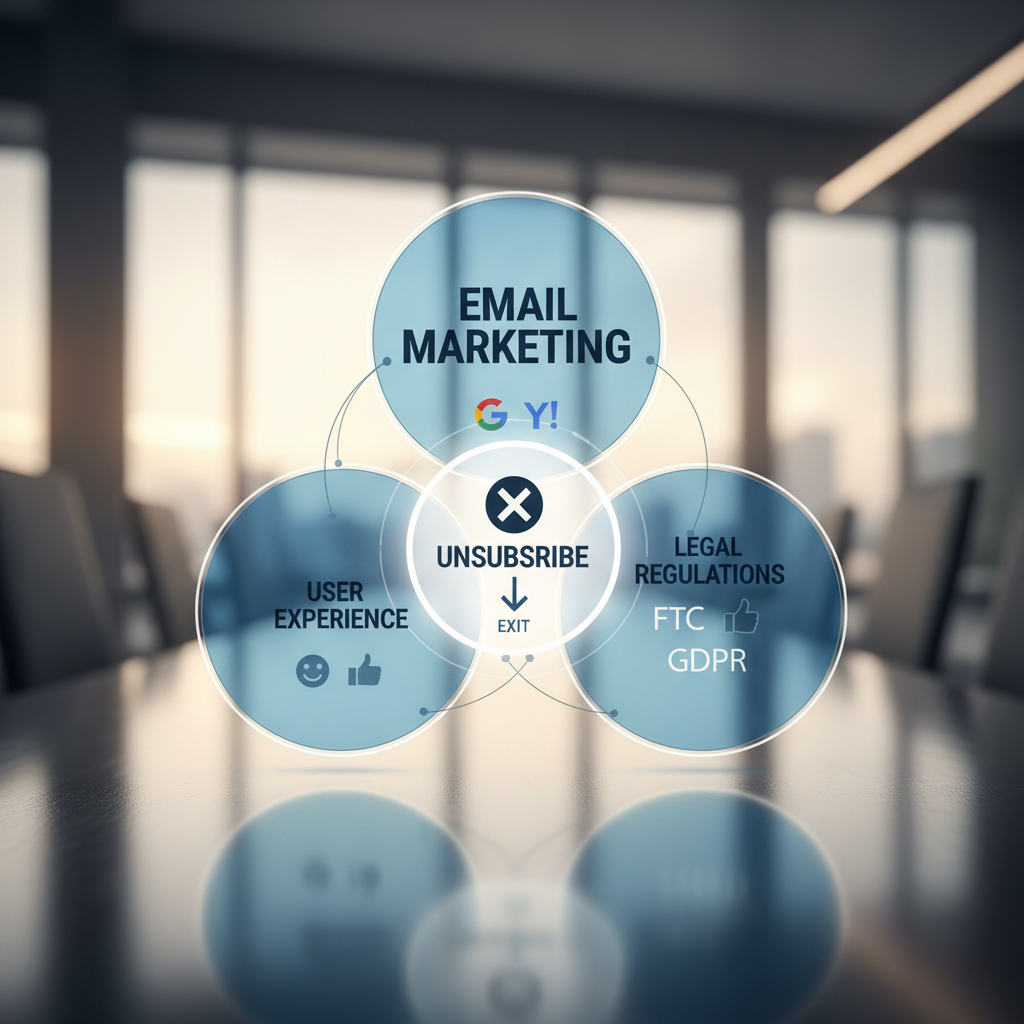
This article is your definitive guide to managing unsubscribes in late 2025. We will cover the technical implementation of "One-Click" headers, the nuanced legal reality following the vacated FTC rule, and the UX strategies that actually retain customers without holding them hostage.
The New "One-Click" Reality: Google & Yahoo Requirements
Let's start with the technical requirements because they are non-negotiable. As of February 2024, Google and Yahoo began enforcing strict requirements for anyone sending more than 5,000 emails a day. The most critical component? The implementation of RFC 8058.
This isn't just about having a link in the footer of your email text. This is about a specific technical header that allows the email client (like Gmail) to display a native "Unsubscribe" button right next to the sender's name.
Technical Implementation of RFC 8058
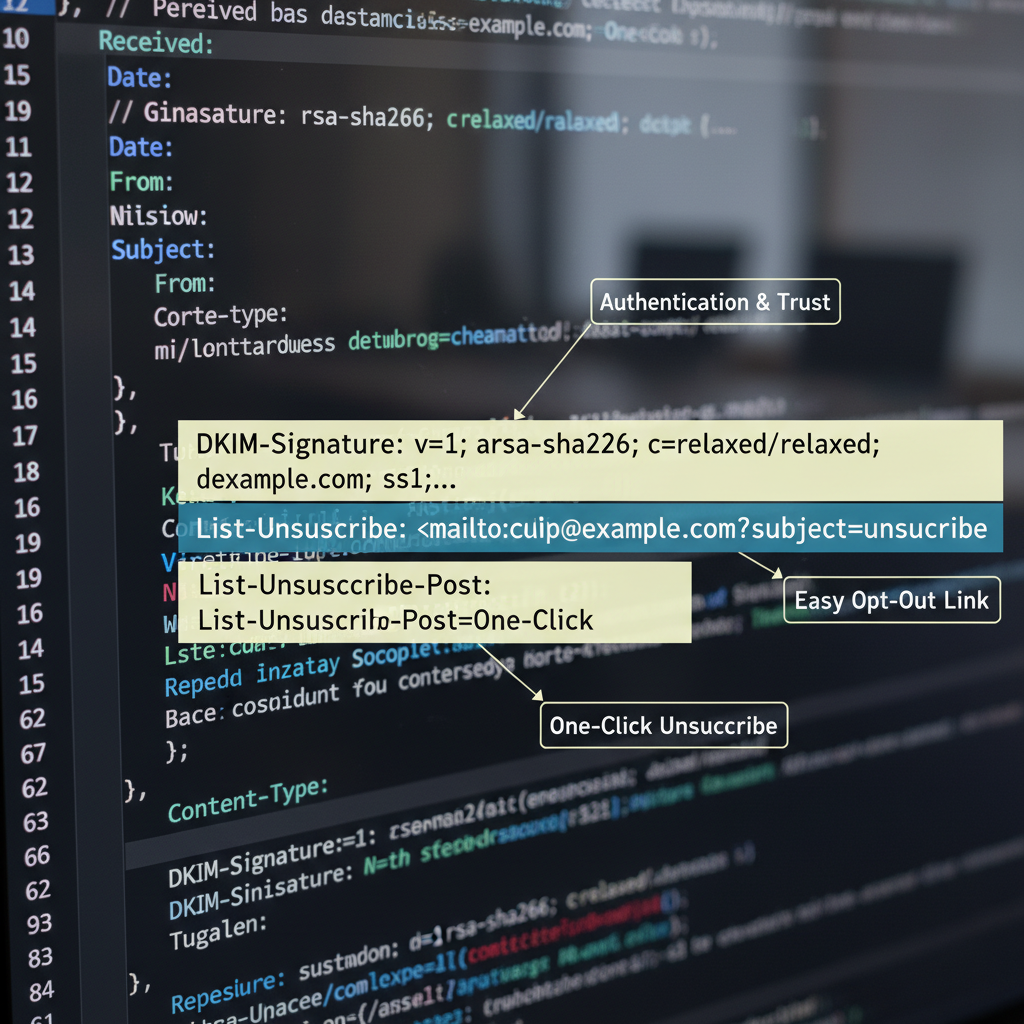
According to the updated Google Email Sender Guidelines, bulk senders must support "One-Click Unsubscribe." To do this, your emails must include two specific headers. If you only include a mailto: link, you are not compliant.
You must include:
- List-Unsubscribe: Containing both a
mailto:link and an HTTPS link. - List-Unsubscribe-Post: Containing the value
List-Unsubscribe=One-Click.
The List-Unsubscribe-Post header is the magic switch. It tells Gmail, "Hey, if the user clicks unsubscribe in your interface, send a POST request to my server, and I will handle it silently without opening a browser window."
List-Unsubscribe-Post: List-Unsubscribe=One-Click
Crucial Warning: According to technical documentation from deliverability experts at Customer.io (2024), these headers must be covered by your DKIM signature. If they are inserted after the email is signed, or if the signature doesn't verify them, the headers may be ignored by the receiving server.
Legal Landscape 2025: Beyond the Vacated FTC Rule
The legal side of unsubscribing has been a rollercoaster over the last 18 months. It is vital to separate "headlines" from "legal reality."
The "Click-to-Cancel" Rollercoaster
In late 2024, the FTC finalized a "Click-to-Cancel" rule that would have required canceling a subscription to be as easy as signing up—literally the same number of clicks. However, strictly speaking, that specific rule is currently off the table.
According to legal analysis from WilmerHale (July 2025), the Eighth Circuit Court vacated the FTC's Negative Option Rule, stating the commission overstepped its bounds. But here is the nuance that many businesses are missing: State laws did not go away.
California’s Automatic Renewal Law (ARL) and New York’s GBL § 527 still mandate easy cancellation methods. If you have customers in California (and who doesn't?), you are effectively bound by "Click-to-Cancel" principles regardless of the FTC ruling.
Global Compliance Cheat Sheet
While the US argues over click counts, the rest of the world has settled on strict privacy standards. Managing a global list means adhering to the strictest common denominator.
- United States (CAN-SPAM): You legally have 10 business days to process an unsubscribe request. However, waiting this long is dangerous for deliverability (more on that later). Violations can result in penalties of up to $53,088 per email according to the FTC's inflation-adjusted 2024/25 figures.
- European Union (GDPR): The "Right to Object" (Article 21) means opt-out must be respected immediately. Pre-ticked boxes are illegal.
- Canada (CASL): Perhaps the strictest. Unsubscribe mechanisms must be "readily performed" and valid for 60 days.

Optimizing the User Experience (UX) to Save Subscribers
I often tell clients: Don't treat an unsubscribe click as a breakup. Treat it as a negotiation. If someone clicks the link in your email footer, they are unhappy—but they haven't left yet.
This is where the Preference Center becomes your most valuable retention asset. A 2025 study by MailerLite indicates that simple unsubscribe processes keep complaint rates low, but offering options can save 20-30% of users.
The "Opt-Down" Strategy
Instead of a binary "Stay" or "Go," offer granularity. I recently audited a campaign for a B2B SaaS company where we replaced the direct unsubscribe link with a preference center offering three choices:
- Unsubscribe from everything.
- Unsubscribe from "Product Updates" but keep "Weekly Newsletter."
- Snooze: "Pause emails for 30 days."
The result? 15% of the people who intended to leave chose the "Snooze" option instead. They were just overwhelmed, not disinterested.
The e-commerce checkout platform Bolt uses a masterclass strategy. When users unsubscribe, the confirmation page doesn't guilt-trip them. It says "We'll miss you," confirms the action immediately, but includes a prominent "Resubscribe" link in case it was a mistake. This "low friction" approach maintains high brand sentiment even among those leaving.
The 0.3% Danger Zone: Managing Complaint Rates
Forget the law for a moment. Let's talk about the algorithm. Google has drawn a line in the sand regarding spam complaint rates.
According to Google's Email Sender Guidelines, you should keep spam complaints below 0.1%. If you hit 0.3%, you enter the danger zone where your domain reputation may be irreparably damaged, leading to blocking of your messages.
Feedback Loops and List Hygiene
To stay below 0.1%, you need data. You must sign up for Google Postmaster Tools. This is the only way to see the "Spam Rate" metric that Gmail sees. Regular Email Service Providers (ESPs) often underreport spam complaints because Gmail doesn't feed that data back to them via traditional feedback loops.
Furthermore, you must implement aggressive sunsetting policies. According to data from Litmus, removing unengaged subscribers (those with no opens in 90 days) can improve overall inbox placement by 10-15%. Why? Because people who don't open your emails are the ones most likely to eventually mark them as spam just to clean up their inbox.

FAQ: Managing High-Risk Unsubscribe Scenarios
There are always edge cases. Here are the most common questions I get from clients facing complex unsubscribe challenges.
Q: Can I require a login to unsubscribe?
Absolutely not. This is a violation of CAN-SPAM and a guaranteed way to spike your spam complaints. If a user can't remember their password, they won't recover it just to unsubscribe—they will just hit the "Report Spam" button. The link must contain a token that identifies the user without a login.
Q: Do transactional emails need a one-click unsubscribe?
Generally, no. Transactional emails (receipts, password resets) are exempt from unsubscribe requirements under CAN-SPAM. However, be very careful. If you include marketing messages inside a receipt (e.g., "Thanks for your order! Check out these other items..."), the email may be reclassified as commercial, triggering all compliance requirements.
Q: My unsubscribe rate is 0.5%. Should I panic?
Not necessarily, but you should investigate. Benchmarks from 2025 show average unsubscribe rates across industries hover between 0.1% and 0.22%. If you are double the industry average, your content relevance is off, or your frequency is too high.
Conclusion
The unsubscribe process is the final touchpoint in your user's current lifecycle. It defines how they remember you. Will they remember a brand that respected their time and privacy, or one that forced them to jump through hoops?
In the current landscape, compliance is just the baseline. The real goal is reputation protection. By implementing RFC 8058 headers for Google, respecting the spirit of easy cancellation despite the FTC vacatur, and using preference centers to offer alternatives, you turn a potential risk into a strategic advantage.
Clean your lists. Respect the exit. Protect your domain. That is how you win the inbox in 2025.