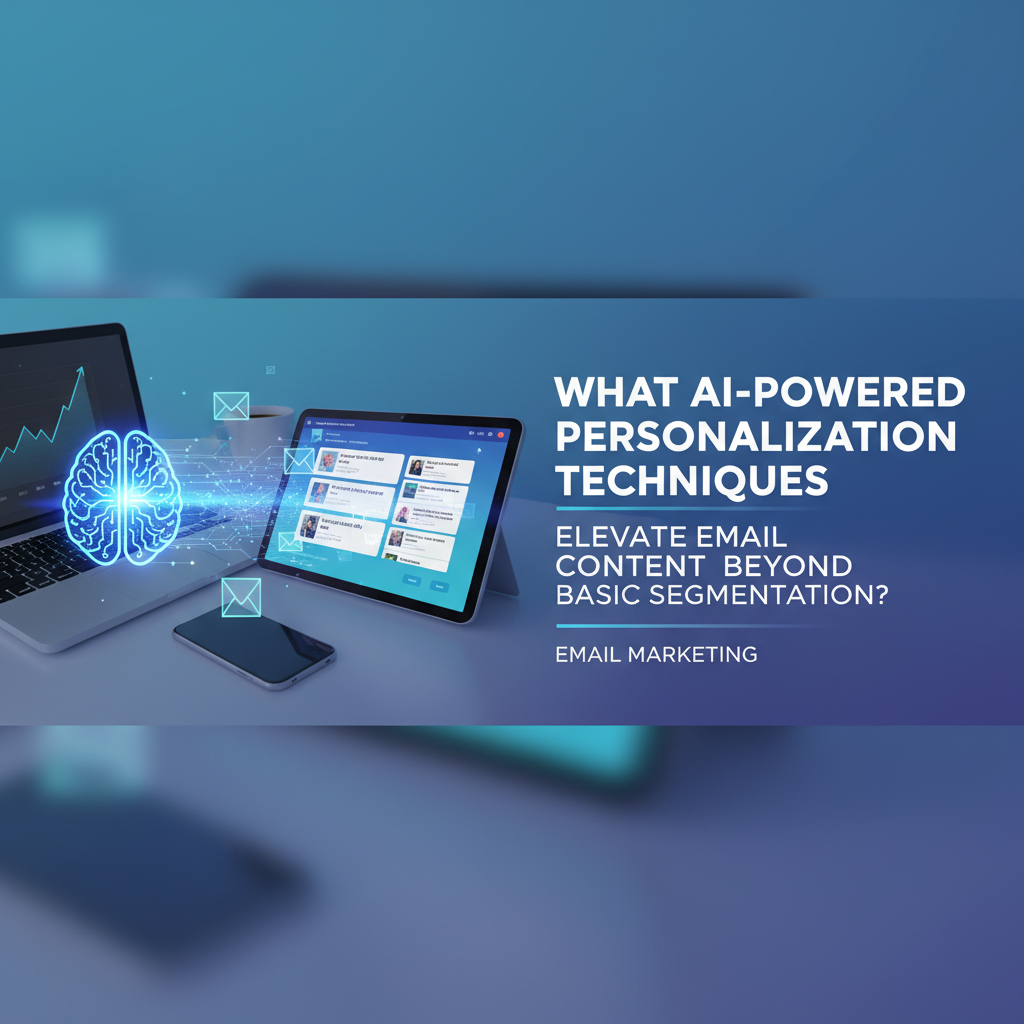
Beyond Segmentation: 7 AI-Powered Personalization Techniques Transforming Email in 2025
I still remember the first time I realized my "personalized" email strategy was a lie. I was sitting in a boardroom, proudly presenting open rates for our "segmented" list—users grouped by "Age 25-34" and "Lives in New York."
A senior data scientist leaned over and whispered, "That’s not personalization. That’s just stereotyping with a spreadsheet."
She was right. For years, we've treated customers like data points frozen in time. We group them by who they are, but we fail to speak to what they will do next. But in 2025, the game has fundamentally changed. The era of "First Name" tags is dead. We are now entering the age of Agentic AI and predictive modeling.
If you're still relying on basic segmentation, you are leaving massive value on the table. According to G2, marketers who use AI to personalize emails see a 41% increase in revenue and a 13.44% increase in CTR.
In this guide, I'm going to walk you through the seven advanced techniques that move you up the "Personalization Ladder"—from static tags to autonomous, revenue-generating agents.
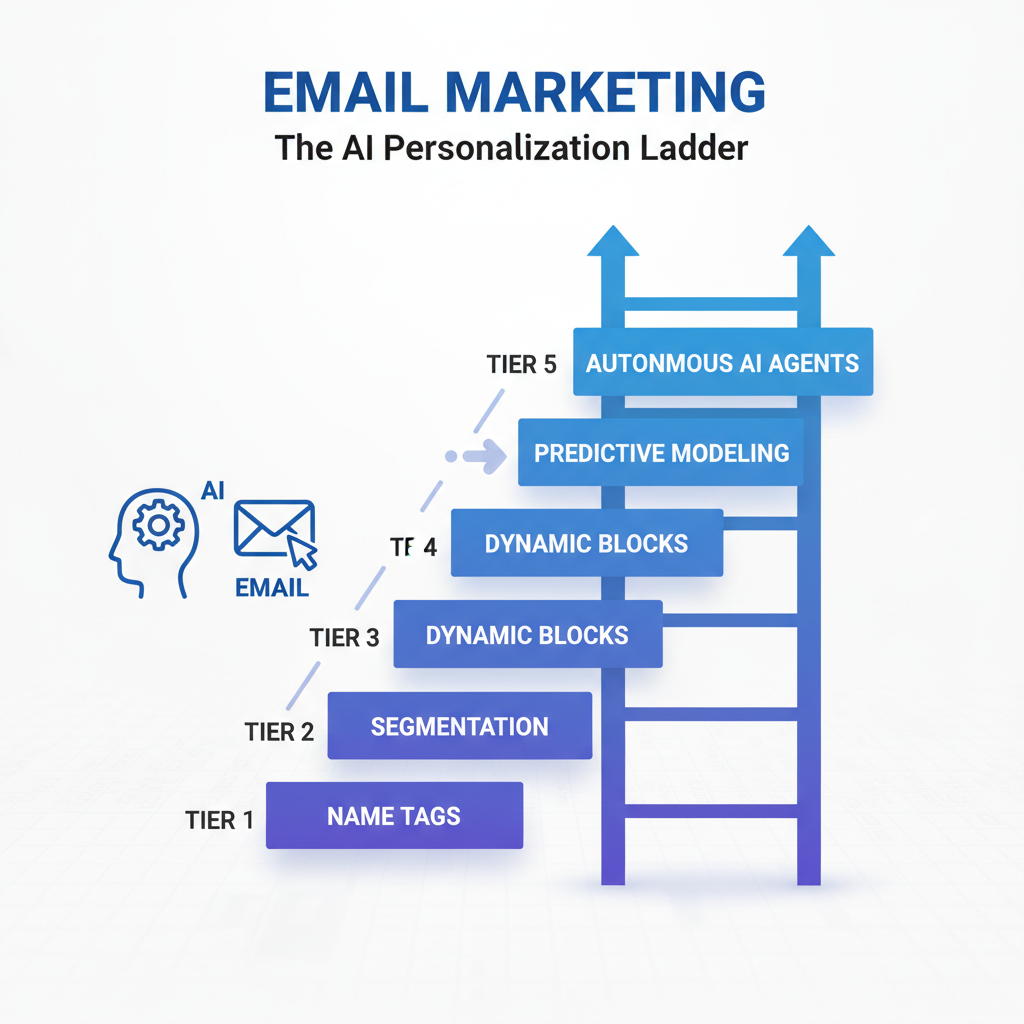
The Evolution: Why Basic Segmentation is Failing
Let's be honest about the "Batch and Blast" method—it's efficient, but it's increasingly ineffective. Even standard segmentation, where you split your list into "Active" and "Inactive" users, is struggling to keep up with consumer expectations. The problem isn't the data; it's the latency.
Rule-based logic (e.g., "If user buys shoes, send sock email") is reactive. It looks backward. AI-powered personalization is proactive. It looks forward.
The difference lies in Machine Learning (ML) propensity models. While a human marketer can handle three or four segments, an algorithm can calculate thousands of "micro-segments" in real-time. This isn't just theory; Humanic AI reports that automated, AI-driven emails drive 320% more revenue than manual campaigns.
Technique 1: Predictive Send-Time Optimization (STO)
We all have that one friend who only replies to texts at midnight. Your customers are no different. Yet, most marketers still schedule emails for "Tuesday at 10 AM" because a blog post from 2018 told them to.
Predictive Send-Time Optimization (STO) analyzes an individual's historical open and click data to identify their specific "micro-moment" of attention. It doesn't send the blast to everyone at once; it holds the email in a queue and releases it individually when that specific person is most likely to be holding their phone.
This is critical because mobile usage is dominating. Wix data shows that 59% of Millennials use their cellphones to check emails. If your email lands while they are driving or in a meeting, it gets buried. If it lands when they usually scroll, you win.
Technique 2: Dynamic Content Injection via Generative AI
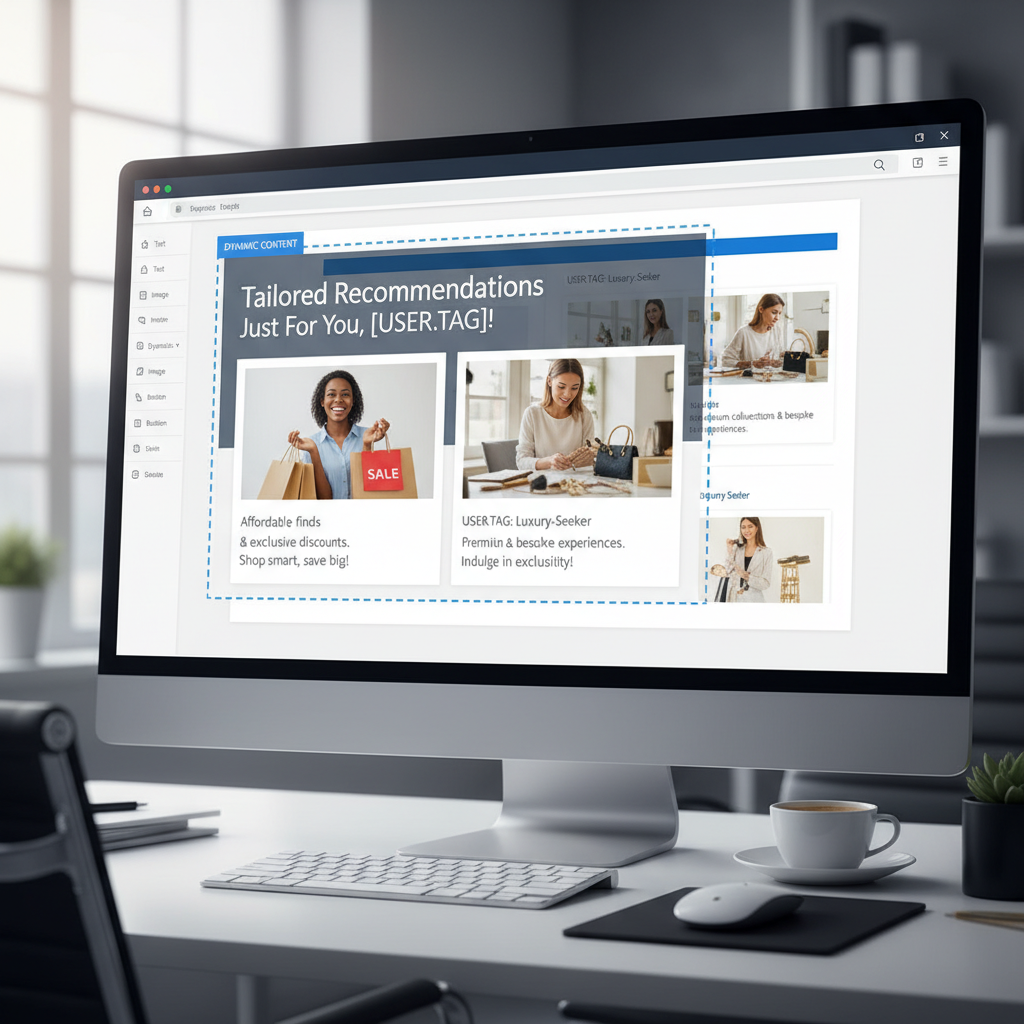
Here is where things get truly interesting. In the past, "dynamic content" meant swapping out a hero image. Today, we use Natural Language Generation (NLG) to rewrite the body copy itself based on the recipient's personality profile.
Imagine you are selling a travel package.
- User A (Impulse Buyer): The AI generates copy focused on "FOMO," limited availability, and excitement.
- User B (Value Hunter): The AI rewrites the exact same email to highlight savings, bundled value, and practical logistics.
This isn't science fiction. SuperAGI found that 34% of marketers are already using generative AI specifically for writing email copy. By integrating your Customer Data Platform (CDP) with a Large Language Model (LLM), you can generate thousands of unique email variations instantly.
Technique 3: Predictive Churn & "Next-Best-Action" Modeling
Retaining a customer is cheaper than acquiring a new one—we know this. But usually, we don't know a customer is leaving until they've already unsubscribed. Predictive modeling flips this script by identifying "at-risk" behaviors before the user even realizes they are disengaging.
Case Study: Every Man Jack
Consider the success of the grooming brand Every Man Jack. They faced a classic problem: they were sending replenishment emails too early (45 days) or too late for their customers' actual usage habits.
By using Klaviyo's predictive analytics flows to calculate the specific consumption rate for each customer, they didn't just guess; they knew exactly when a customer was running low. The result? A 25% year-over-year increase in revenue from these automated flows, according to Klaviyo Case Studies.
This is "Next-Best-Action" modeling. The AI asks: "What is the single most valuable action this user can take right now?" Sometimes it's a purchase. Sometimes, it's just reading a blog post to keep the brand top-of-mind.
Technique 4: Agentic AI & Autonomous Journey Mapping
If you remember nothing else from this article, remember the term "Agentic AI." This is the frontier for 2025.
Traditional automation requires you to draw a flowchart: "If Open, wait 2 days, then Send Email B." Agentic AI removes the flowchart. You give the AI a goal (e.g., "Maximize renewals"), and the AI Agent autonomously decides the path.
If the Agent notices that "Email B" is causing unsubscribes, it will self-correct and try "Email C" or a text message instead, without you lifting a finger. It runs multivariate testing on steroids—testing 50+ variations simultaneously to find the winner.
It sounds intimidating, but the efficiency gains are undeniable. B2B sales teams using this level of automation streamline processes by 10-15% according to Humanic AI.
Technique 5: Sentiment-Aware Subject Line Optimization
Open rates are the gatekeepers of revenue. If they don't open, they don't buy. AI is now capable of analyzing the emotional sentiment of your subject lines compared to your specific audience's history.
Does your audience respond to negativity (e.g., "Stop making this mistake") or positivity (e.g., "Boost your growth")? AI tools analyze this at scale. Artsmart.ai reports that AI-driven subject line optimization can boost open rates by up to 10%.
More importantly, it prevents "fatigue." If the AI detects that a user has been bombarded with "Urgent!" subject lines recently, it will automatically switch to a softer, more informational tone to preserve the relationship.
Technique 6: Real-Time Inventory & Contextual Data
Have you ever clicked an email promoting a product, only to find it sold out? It's a frustrating experience that kills trust. AI-powered contextual marketing solves this by checking your inventory database at the exact moment the email is opened (not sent).
If the red shoes are sold out, the image dynamically changes to the blue shoes. If it's raining in the user's location (using IP-based weather data), the hero image changes to someone using an umbrella. This creates a seamless, "magical" user experience that feels incredibly relevant.
Navigating the Minefield: Privacy, Trust, and the FTC
Now, here is the warning label. With great power comes great legal responsibility. As we hand more control to AI, the risk of "hallucinations" or deceptive practices increases.
The days of the "Wild West" in AI marketing are over. In late 2024, the FTC announced "Operation AI Comply," a crackdown on deceptive AI claims.
Lina M. Khan, FTC Chair, stated: "The FTC’s enforcement actions make clear that there is no AI exemption from the laws on the books." (FTC Press Release)
Trust is your most valuable currency. Salesforce found that 68% of customers believe advancements in AI necessitate higher trust in companies. If you use AI to generate content, ensure it is fact-checked and transparent. Do not fake "personalization" that feels creepy or intrusive. Privacy-compliant AI—using zero-party data that customers willingly give you—is the only sustainable path forward.
FAQ: Integrating AI into Your Email Stack
Is AI email personalization GDPR compliant?
Yes, provided you use it correctly. AI generally requires data processing. You must ensure your AI processor (like your ESP) is compliant, and you should focus on "Zero-Party Data" (data the user explicitly gives you) rather than scraping third-party data without consent.
What is the difference between segmentation and hyper-personalization?
Segmentation groups users into buckets (e.g., "All women under 30"). Hyper-personalization treats every user as a segment of one, customizing content, send time, and product recommendations specifically for that individual.
How does AI improve email deliverability?
AI improves deliverability by predicting which users are likely to mark you as spam and suppressing them from broadcasts. It also optimizes engagement (opens/clicks), which signals to Gmail and Outlook that your domain is trustworthy.
Will AI replace email marketing copywriters?
Unlikely. It replaces the drudgery of writing 50 variations of the same email. Strategic copywriters are needed more than ever to feed the AI the right prompts, brand voice guidelines, and emotional hooks.
Conclusion: The Shift to AI-Assisted Revenue
The shift we are witnessing isn't just about new tools; it's about a fundamental change in philosophy. We are moving from "Marketer-Led" strategies, where we guess what users want, to "AI-Assisted" strategies, where we listen to what the data tells us.
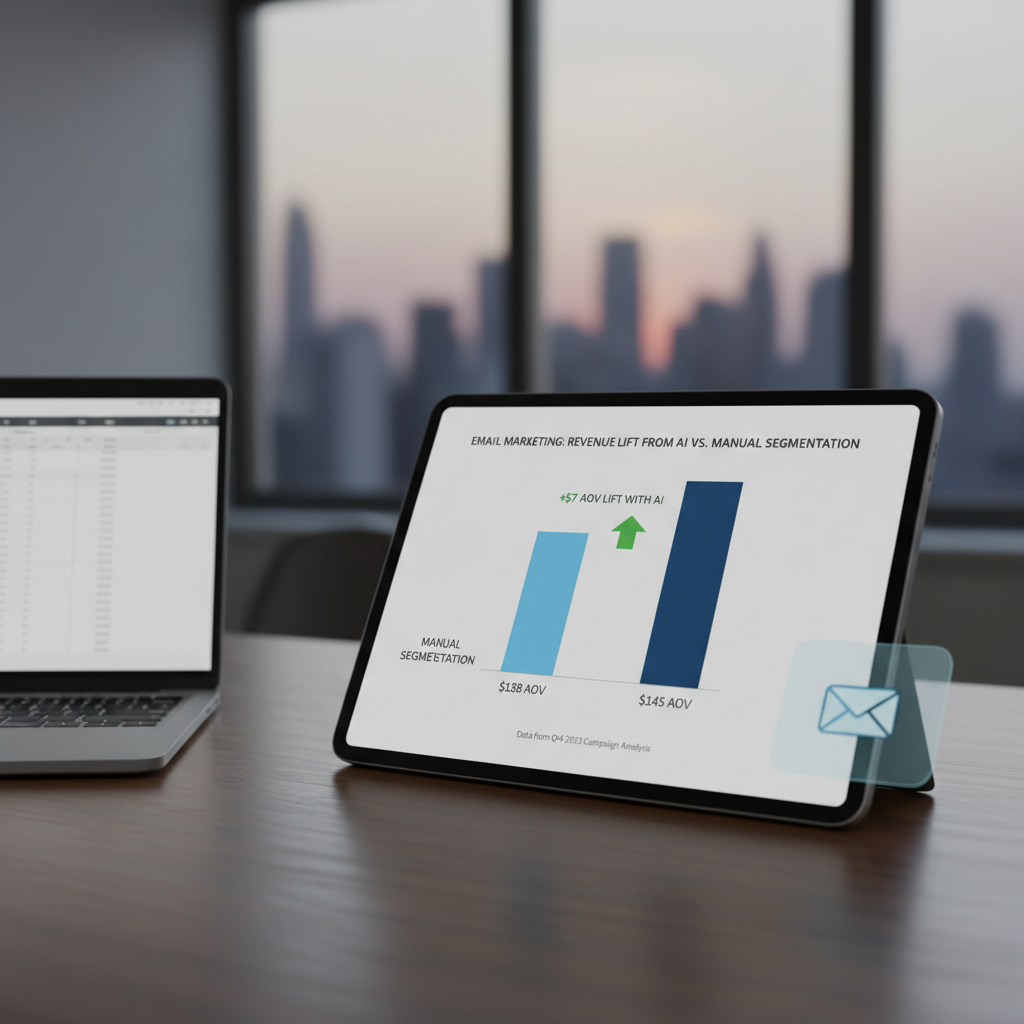
The data is clear: AI-driven campaigns drive higher Average Order Value ($145.08 vs $138.00) and better engagement (G2). But the window to gain this competitive advantage is closing. As adoption hits 63%, those who stick to manual segmentation will look increasingly archaic to their customers.
My advice? Start small. Audit your current Email Service Provider (ESP). Do they have predictive sending? Are you using it? Pick one technique from this list—perhaps Send-Time Optimization or Churn Prediction—and implement it this quarter. Stop broadcasting to the masses, and start having a million one-on-one conversations.