Beyond the Welcome: 7 Advanced Automation Sequences to Skyrocket Customer Lifetime Value (CLV)
The welcome series gets them through the door, but the post-purchase flows keep the lights on. It’s a statistic that every marketer hears but rarely internalizes: 80% of your future revenue will come from just 20% of your existing customers.
In my decade of experience auditing e-commerce and B2B retention stacks, I’ve seen a recurring tragedy. Brands pop champagne on the first sale, send a generic "Thank You," and then let the relationship flatline. They treat the sale as the finish line.
But here is the reality: Acquiring a new customer costs 5 to 25 times more than retaining an existing one, according to data cited by the Harvard Business Review in 2024. If your strategy stops after the welcome series, you are effectively lighting money on fire.
This article isn’t about basic "Happy Birthday" emails. We are going to dismantle the advanced customer retention automation strategies that leverage predictive logic, RFM segmentation, and behavioral triggers to turn one-time buyers into lifetime advocates.
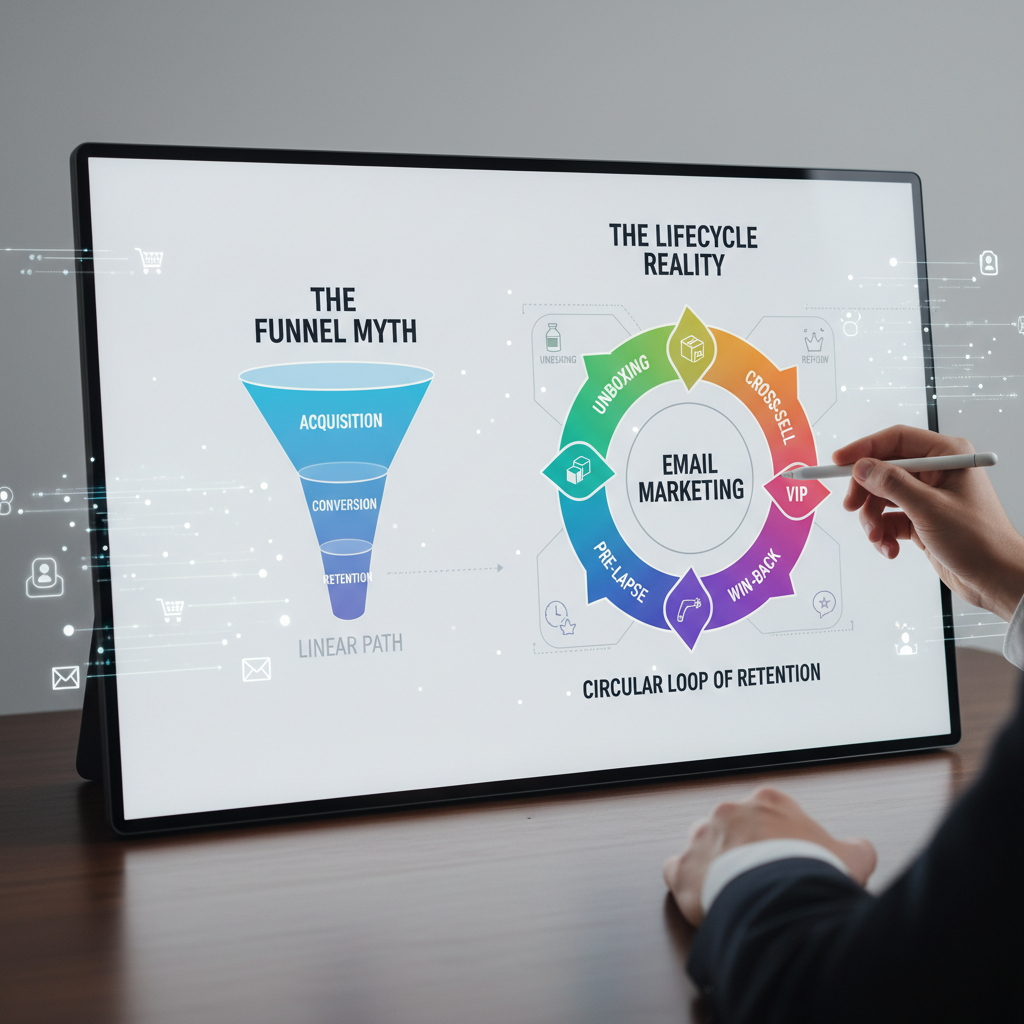
The Mechanics of LTV: Why Retention Automation Wins
Before we dive into the workflows, we need to agree on the math. The goal of retention isn't just "engagement"; it's profitability. According to a retrospective analysis by Bain & Company, increasing customer retention rates by just 5% can increase profits by between 25% and 95%.
The "Silent Churn" Problem
Most customers don't unsubscribe; they just fade away. This is "silent churn." You might look at your list size and feel confident, but if 60% of those contacts haven't opened an email in 90 days, your effective list is half the size you think it is.
Automated flows combat this by moving from "Broadcasts" (sending the same newsletter to everyone) to "Behavioral Triggers" (sending the right message based on user action). The data supports this shift unequivocally: Omnisend's 2025 Email Marketing Insights reveal that post-purchase flows have a click-to-conversion rate 22x higher than standard campaigns.
Repeat customers generate 300% more revenue than first-time buyers.
Source: Dafiti Case Study via Braze, 2024
Sequence 1: The "Unboxing Experience" Flow (The Bridge)
Goal: Eliminate buyer's remorse and drive adoption.
Most brands send a transactional receipt and silence until the product ships. This is a missed opportunity. The time between purchase and delivery is when excitement—and anxiety—is highest.
The Advanced Logic: Don't send the same email to everyone. Use a split path based on Customer Count.
- Path A (First-Time Buyer): They don't know your brand yet. Send a "Welcome to the Family" email that reinforces the brand mission, explains exactly how to use the product (to prevent user error), and highlights support channels.
- Path B (Repeat Buyer): They know who you are. Don't bore them with the mission statement. Send a "You have great taste" email that highlights the community or invites them to share their purchase on social media immediately.
According to Smart Blogger's 2024 statistics, transactional and post-purchase emails see an average open rate of 47.1%. Using this prime real estate for brand indoctrination is critical.
Sequence 2: The "Predicted Replenishment" Nudge
Goal: Secure the second sale at the exact right moment.
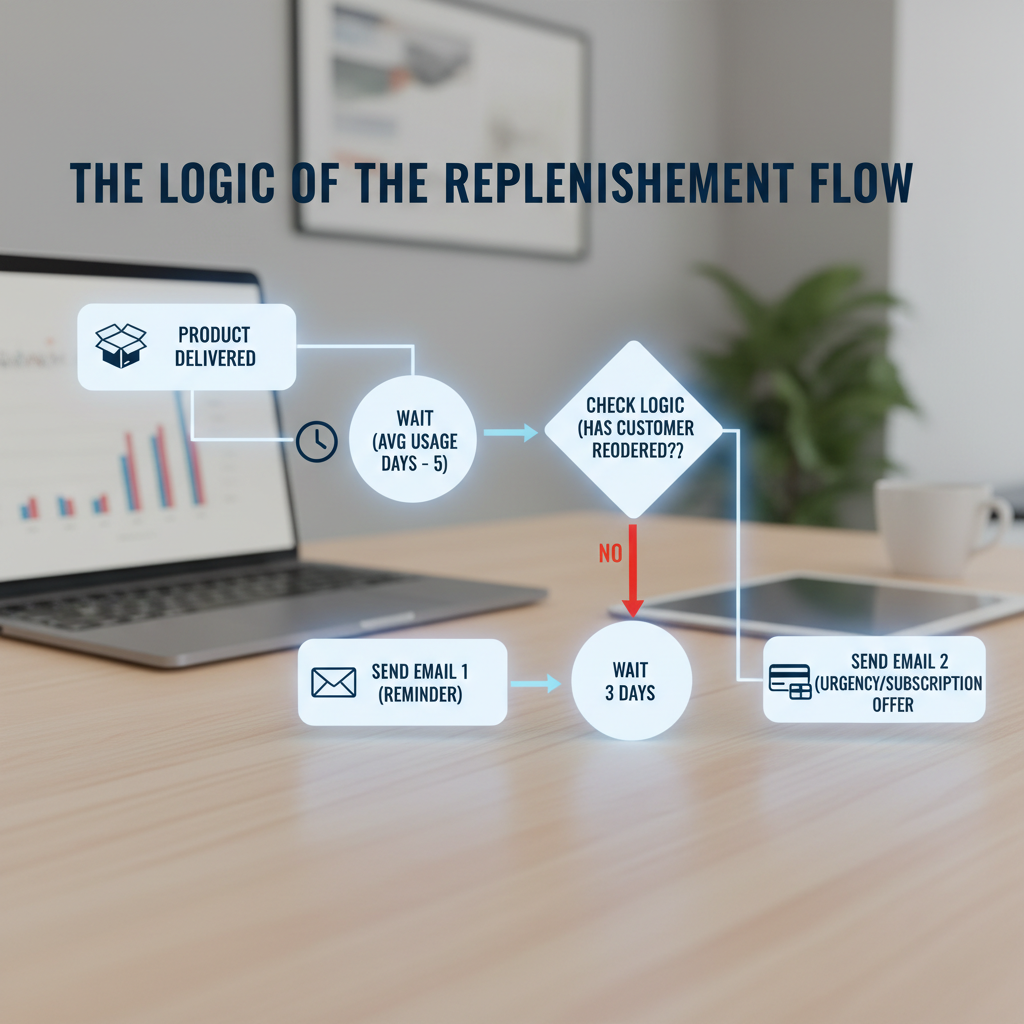
I see many businesses send replenishment emails based on a generic 30-day timer. But if I bought a 3-month supply of supplements, your 30-day email is annoying. If I bought a 2-week supply, your 30-day email is too late.
The Advanced Logic:
You must calculate the trigger date.
Trigger Date = (Volume / Daily Consumption Rate) - Shipping Buffer.
Case Study: Every Man Jack According to a 2024 Klaviyo case study, men's grooming brand Every Man Jack moved away from generic timers. They used predictive analytics to calculate the specific "Date of Next Order" for each user based on their specific product usage (e.g., beard oil lasts longer than body wash). The result was a 25% YoY increase in automation revenue.
Sequence 3: The "Value-First" Cross-Sell (Predictive)
Goal: Increase Average Order Value (AOV) without being pushy.
"You bought shoes, here are some socks." It’s classic, but we can do better. The key difference between a spammy upsell and a helpful cross-sell is data relevance.
The Advanced Logic: Utilize "Frequently Bought Together" data. If your data shows that customers who buy a camera body return 40% of the time to buy a specific lens, automate that suggestion. But here is the trick: Wait until they have received the primary product.
Research indicates that personalized automated emails improve conversion rates by 202% (Smart Blogger, 2024). Context is everything. Frame the cross-sell as an "Upgrade to your experience" rather than "Buy more stuff."
Sequence 4: The VIP Tier & Loyalty Escalator
Goal: Gamify the experience to lock in high-spenders.
Loyalty shouldn't be passive. Chip Bell put it best: "Loyal customers, they don't just come back, they don't simply recommend you, they insist that their friends do business with you." (Source: ShipScience, 2024).
The Advanced Logic: Create hidden tiers in your automation tool.
- Trigger: Order Count = 3 OR Total Spend > $500.
- Action: Send "Unlocked" email.
- Content: Give them something unadvertised. Early access to sales, a direct line to support, or a permanent 5% discount code.
Case Study: Callie’s Hot Little Biscuit This brand implemented a specific "Second Purchase" flow. When a customer crossed the threshold from a one-time buyer to a two-time buyer, they triggered a VIP status alert. According to Klaviyo's 2024 data, this strategy contributed to a 157.8% YoY growth in revenue from flows.
Sequence 5: The "Pre-Lapse" Education Series (SaaS Focus)
Goal: Prevent churn before it happens.
For SaaS or subscription models, churn doesn't happen when they hit "cancel." It happens weeks earlier when they stop logging in. This is where AI comes in.
The Advanced Logic: Trigger an email based on a drop in activity. If a user's login frequency drops by 30% over 30 days, trigger a "Did you know?" sequence highlighting underutilized features.
According to SuperAGI's 2025 report on customer retention, AI-driven churn prediction models can reduce client attrition by 25%. Netflix is the master of this, using algorithms to predict churn risk based on viewing behavior and triggering personalized recommendations to re-hook the user.
Sequence 6: The "Emotional Win-Back" (RFM Based)
Goal: Re-activate dormant high-value users.
Most win-back campaigns are lazy: "We miss you, here is 10% off." The problem? You are training your customers to wait for a discount, and you are giving away margin to people who might not be worth it.
The Advanced Logic: RFM Segmentation Use Recency, Frequency, and Monetary (RFM) analysis to dictate the offer.
| Customer Segment | The Strategy | The Offer |
|---|---|---|
| High Value / Dormant (Spent $500+, inactive 90 days) | Aggressive recovery. We need them back. | $20 Credit (Dollar amount works better than %) + Emotional "We miss you" copy. |
| Low Value / Dormant (Spent $20, inactive 90 days) | Low-effort check-in. | "Are you still interested?" No discount. Don't sacrifice margin. |
The Encharge.io Team notes in their 2025 retention guide: "You can't fix retention with one message. [You need] smart, behavior-based automation that actually works."
Sequence 7: The Review & UGC Loop
Goal: Social proof for acquisition + engagement for retention.
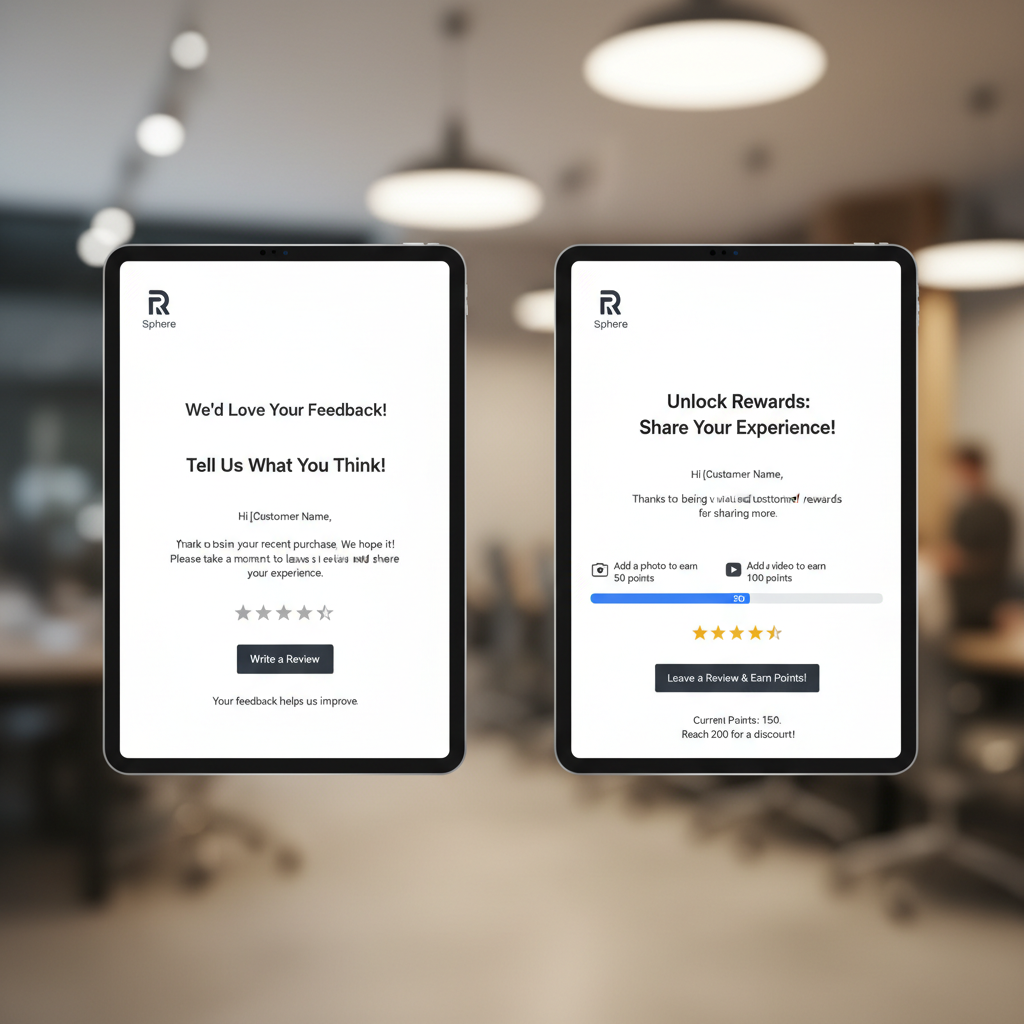
Asking for a review is standard. asking for User Generated Content (UGC) in exchange for loyalty points is advanced. This turns the customer into a partner.
The Advanced Logic: Time this requests for after the customer has had time to experience value (similar to the replenishment flow). Incentivize video or photo reviews with a higher reward tier than text reviews.
Calculate Your Potential: CLV Estimator
Not sure how much effort to put into these flows? Use this calculator to estimate the lifetime value of a customer. If your CLV is high, your investment in automation should match it.
Simple CLV Calculator
Implementing Your Stack: Tools & Integrations
You cannot execute these sequences with basic tools. To implement the logic discussed above (predictive dates, split paths, RFM analysis), you need a robust tech stack.
Platform leaders like Klaviyo, Omnisend, and HubSpot have native integrations for most of these flows. For the predictive elements, tools specifically focused on AI—like the ones mentioned in the SuperAGI 2025 Case Studies—are becoming essential for reducing churn rates.
Conclusion
Retention is a game of inches. Automating these inches creates miles of revenue. By implementing these 7 advanced customer retention automation sequences, you move beyond the "spray and pray" method of email marketing and enter the realm of true lifecycle management.
Remember the words of Peter Drucker: "The purpose of a business is to create and keep a customer."
Start with one sequence. I recommend the Predicted Replenishment flow if you sell consumables, or the Unboxing/Bridge flow if you sell durables. Monitor the data, iterate on your creative, and watch your LTV climb.
Key Takeaways
- Shift from broadcast emails to behavior-triggered flows.
- Use Customer Count to split your messaging for first-time vs. repeat buyers.
- Calculate replenishment timing mathematically, don't guess.
- Segment your Win-Back flows by RFM value—don't discount your best customers.
- Leverage predictive analytics to anticipate churn before it happens.
Frequently Asked Questions (FAQ)
What automated emails should I send after the welcome series?
Immediately after the welcome series, prioritize the "Unboxing/Bridge" flow to ensure product adoption. Follow this with a "Replenishment" flow (for consumables) or a "Cross-sell" flow (for related accessories). Finally, implement a "Win-back" flow for customers who go dormant.
How do you calculate CLV for email marketing?
Customer Lifetime Value (CLV) is calculated as: (Average Order Value) x (Purchase Frequency) x (Customer Lifespan). Email marketing increases this by improving Purchase Frequency (through replenishment emails) and Lifespan (through win-back campaigns).
What is the difference between transactional and marketing automation?
Transactional automation relates to the logistics of a purchase (Order Confirmation, Shipping Update) and has very high open rates. Marketing automation relates to the relationship (Welcome Series, Cross-sells). The "Advanced" strategy blends the two, adding marketing messages inside transactional emails.
What is a post-purchase nurture sequence?
A post-purchase nurture sequence is a series of automated emails designed to educate the customer on their purchase, reduce buyer's remorse, and build community, rather than immediately asking for another sale.
Can automation reduce customer churn rates?
Yes. By identifying "pre-lapse" behaviors—such as a reduction in login frequency or website visits—automation can trigger re-engagement campaigns to bring the customer back before they officially churn. SuperAGI notes AI models can reduce attrition by 25% using this method.