The Ultimate Guide to Re-Engagement Strategies for Dormant Email Subscribers in 2025
Your email list is leaking revenue. Here is the definitive blueprint to fix it.
Your email list is leaking revenue. It’s a harsh truth, but in 2025, simply sending a "We Miss You" subject line isn't enough to wake up the 25% of your list that has gone cold. I've seen brands with millions of subscribers struggle to hit a 10% open rate because they are hauling around "dead weight" that drags down their sender reputation with Gmail and Yahoo.
But here is the good news: those dormant subscribers are a goldmine waiting to be tapped. If you approach them correctly, they are significantly more valuable than cold traffic.
In this guide, we are going to dismantle the outdated "spray and pray" reactivation methods. Instead, we will explore the AI-driven, human-centric strategies that are reactivating millions of users for top brands this year. From the "P.I.G." framework to the risky-but-rewarding "Permission Pass," this is your roadmap to list hygiene and revenue recovery.
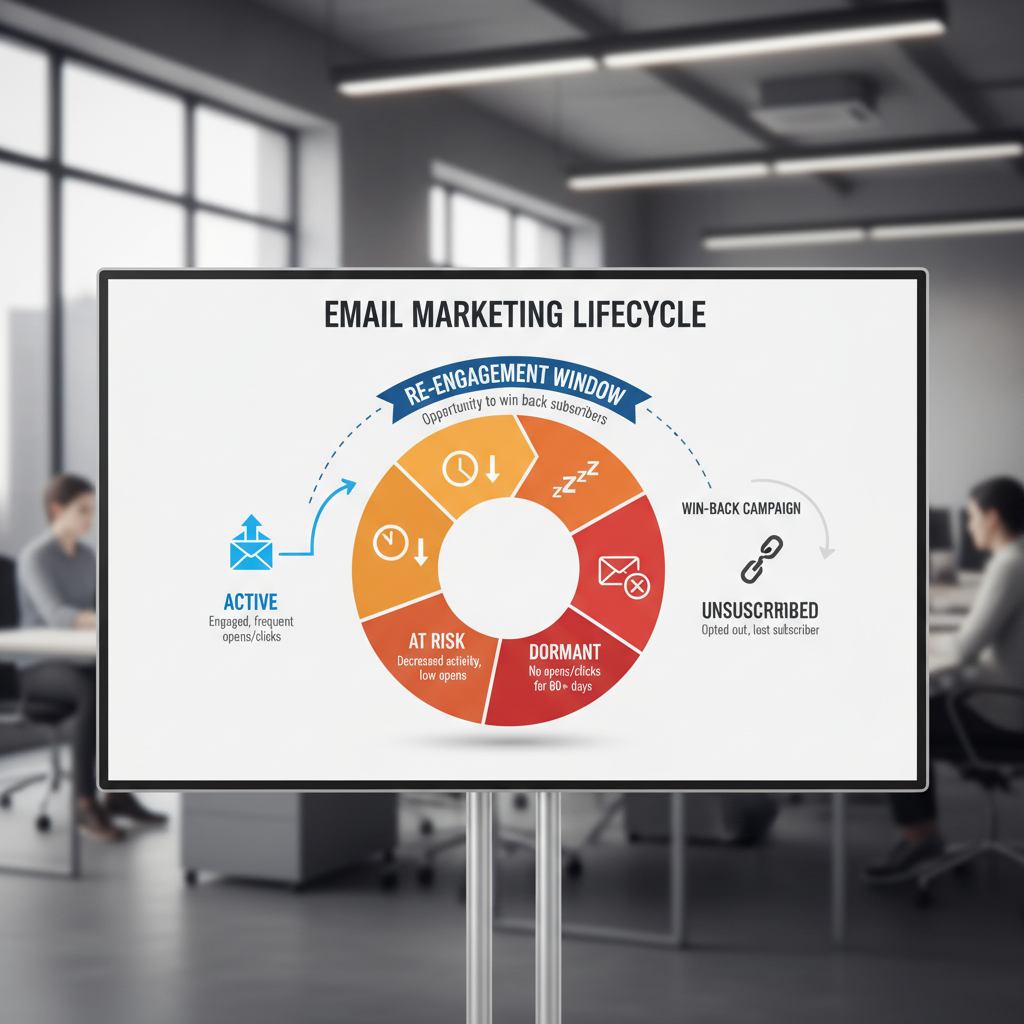
Why Dormant Subscribers Are Killing Your Deliverability (And Revenue)
Before we get into the "how," we need to address the "why." Many marketers I talk to are terrified of deleting subscribers. It feels like throwing away potential money. But holding onto disengaged users is actually costing you more.
The "Hidden" Cost of Graymail
In 2025, Internet Service Providers (ISPs) like Gmail and Yahoo have become incredibly sophisticated. They don't just look at spam complaints; they look at engagement. If you consistently send emails to thousands of people who never open them (known as "Graymail"), the ISPs assume your content is irrelevant. Consequently, they start moving your emails to the Spam folder for your active subscribers too.
According to Netcore Cloud, the average open rate for specific reactivation email campaigns in 2025 hovers around 12.7%. If your general campaigns are performing below this because of dead weight, your domain health is in trouble.
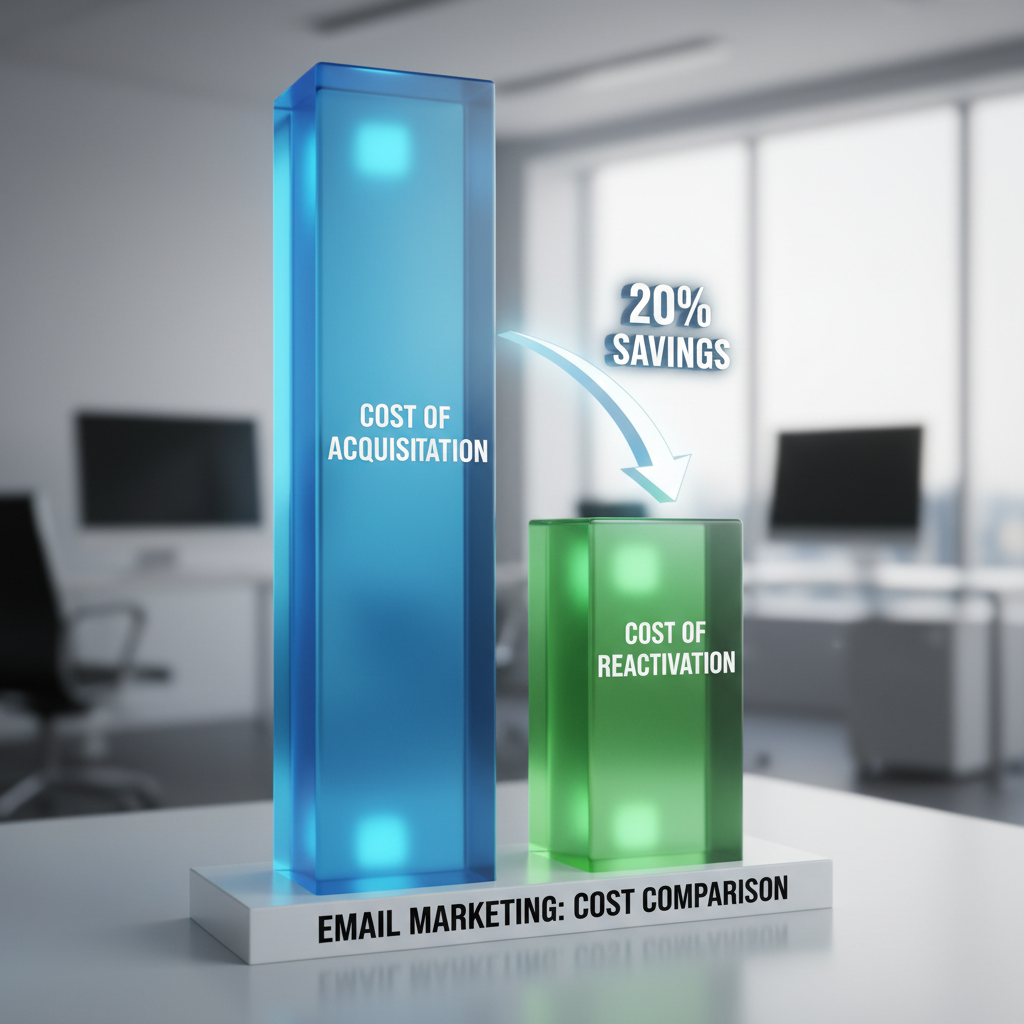
The 20% Rule: Why Retention Wins
If you're wondering if it's worth the effort to wake these people up, the math is undeniable. It is significantly cheaper to re-engage an old lead than to find a new one on Facebook or Google Ads.
Source: Techloy, "9 Best Strategies to Re-engage Dormant Customers," July 24, 2025
Defining "Dormant" in 2025
Years ago, we used to say a subscriber was dormant if they hadn't opened an email in six months. That definition is dangerous in 2025 due to Apple's Mail Privacy Protection (MPP), which can trigger false "opens."
Today, you must look at behavioral signals. A subscriber is dormant if they haven't:
- Clicked a link in 90-120 days.
- Visited your site (tracked via pixel).
- Made a purchase in a timeframe relevant to your product lifecycle.
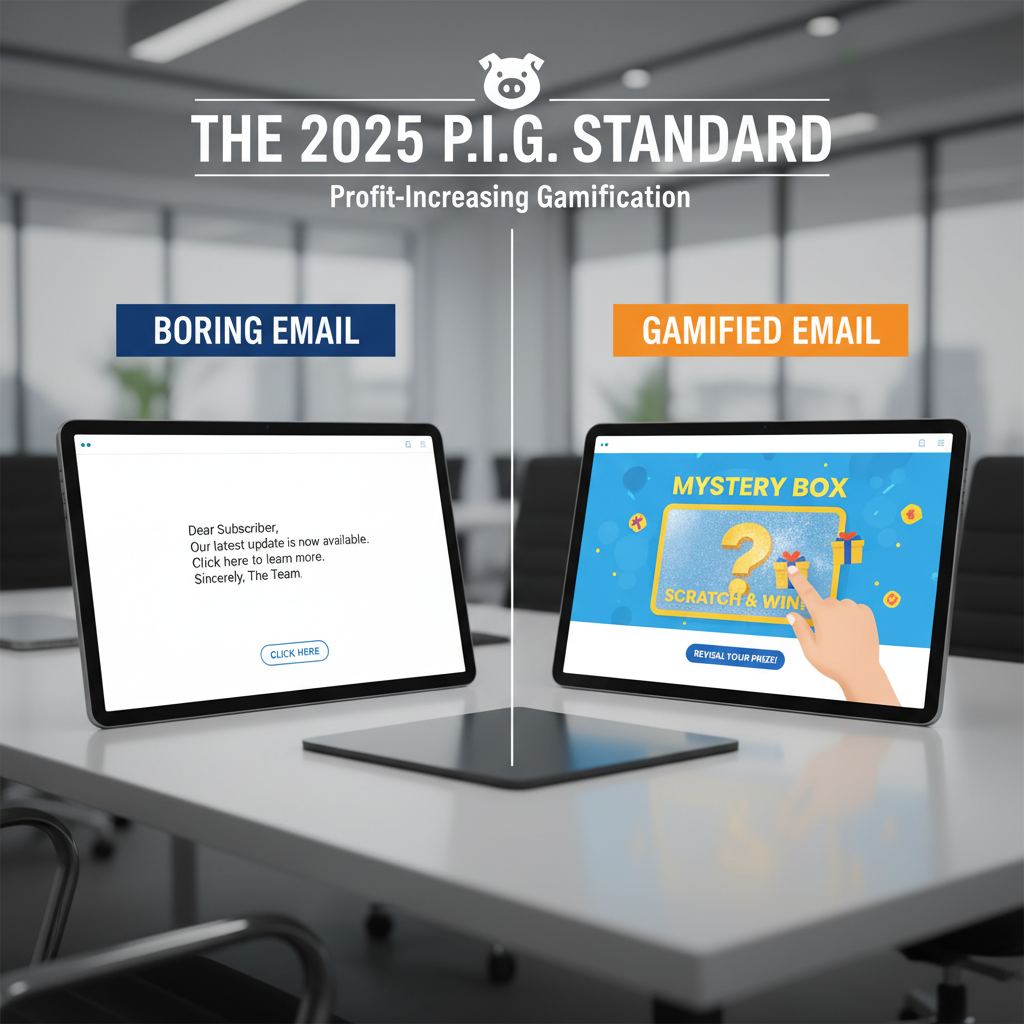
The 2025 Framework: P.I.G. (Personal, Interactive, Gamified)
The days of generic win-back emails are over. Kath Pay of Holistic Email Marketing coined a brilliant concept for 2025 trends that I believe is the cornerstone of modern re-engagement: P.I.G.
"Think 'P.I.G.' for 2025 trends: Personal, Interactive, Gamified. The inbox must be a place where subscribers want to spend time, not just transact." — Kath Pay, Holistic Email Marketing
1. Personalization Beyond the Name Tag
Using "Hi [First Name]" is not personalization; it's a database lookup. Real personalization in 2025 uses zero-party data. If a customer bought a coffee grinder from you six months ago, your re-engagement email shouldn't be a generic "We miss you." It should be: "How is that grinder treating you? Here are 3 new beans that pair perfectly with it."
2. Interactive Elements (AMP for Email)
Friction kills re-engagement. If a user has to click, wait for a browser to load, and then log in, you've lost them. Interactive emails (using AMP technology) allow users to take action inside the email.
According to SuperAGI, including interactive elements like polls or quizzes in re-engagement emails can boost engagement by up to 50%.
3. Gamification
Human beings love to play. Instead of handing out a 20% coupon, make them "unlock" their mystery return gift. This triggers curiosity, a powerful psychological driver that breaks the pattern of inbox blindness.
7 High-Performance Re-Engagement Strategies for 2025
Now that we have the framework, let’s get tactical. Based on my research and current industry benchmarks, here are the seven most effective strategies to deploy right now.
1. The "90/10" Throttle Rule
Here is a technical trap many fall into: they identify 50,000 dead subscribers and blast them all at once. This causes a massive spike in hard bounces and spam complaints, alerting ISPs that something is wrong.
The Fix: Use the 90/10 rule. When you send your re-engagement campaign, mix 10% of your dormant leads with 90% of your most active, engaged superstars. This "dilutes" the negative signals and protects your domain reputation.
2. The Omnichannel Nudge
Sometimes, an email isn't enough because they simply aren't seeing it. Innovative brands are now using SMS or retargeting ads to "warm up" a user before the email hits.
A simple Facebook ad targeting your dormant list saying, "Check your inbox for a special surprise," can prime the user to actually look for your name. It’s an extra cost, but remember the ROI: a Porch Group Media case study showed a national retailer achieving a 7:1 ROI by reactivating 3.5 million emails.
3. The "Permission Pass" Campaign
This is the "nuclear option," but I love it for its honesty. Dela Quist of Alchemy Worx has long argued that we shouldn't fear the unsubscribe. In a Permission Pass, you send an email asking users to confirm they still want to hear from you. If they don't click "Yes," they are removed.
It sounds scary to decimate your list size, but the remaining list will have sky-high engagement metrics.
4. AI-Predicted Send Times
In 2025, sending everyone an email at 9:00 AM is lazy marketing. Tools like Klaviyo and Mailchimp now offer AI-driven "Smart Send Times." The AI analyzes when that specific subscriber is most likely to be checking their phone.
Source: SuperAGI, "5 Advanced AI Automation Strategies," June 29, 2025
5. The "Opinion Request"
People love to feel heard more than they love to be sold to. A SaaS company, Zigpoll, used this strategy brilliantly. Instead of asking dormant users to buy, they sent "Collection Emails" asking for feedback on why they left.
According to Zigpoll's 2025 data, this approach led to a 20% reactivation rate within 30 days. Why? Because it re-opened the conversation without pressure.
6. Emotional Storytelling (The "Break-Up")
We’ve all seen the Duolingo owl crying. It works because it triggers a micro-emotional response. A "break-up" email that uses humor and humanity—"Is it us, or is it you?"—often performs better than a discount code.
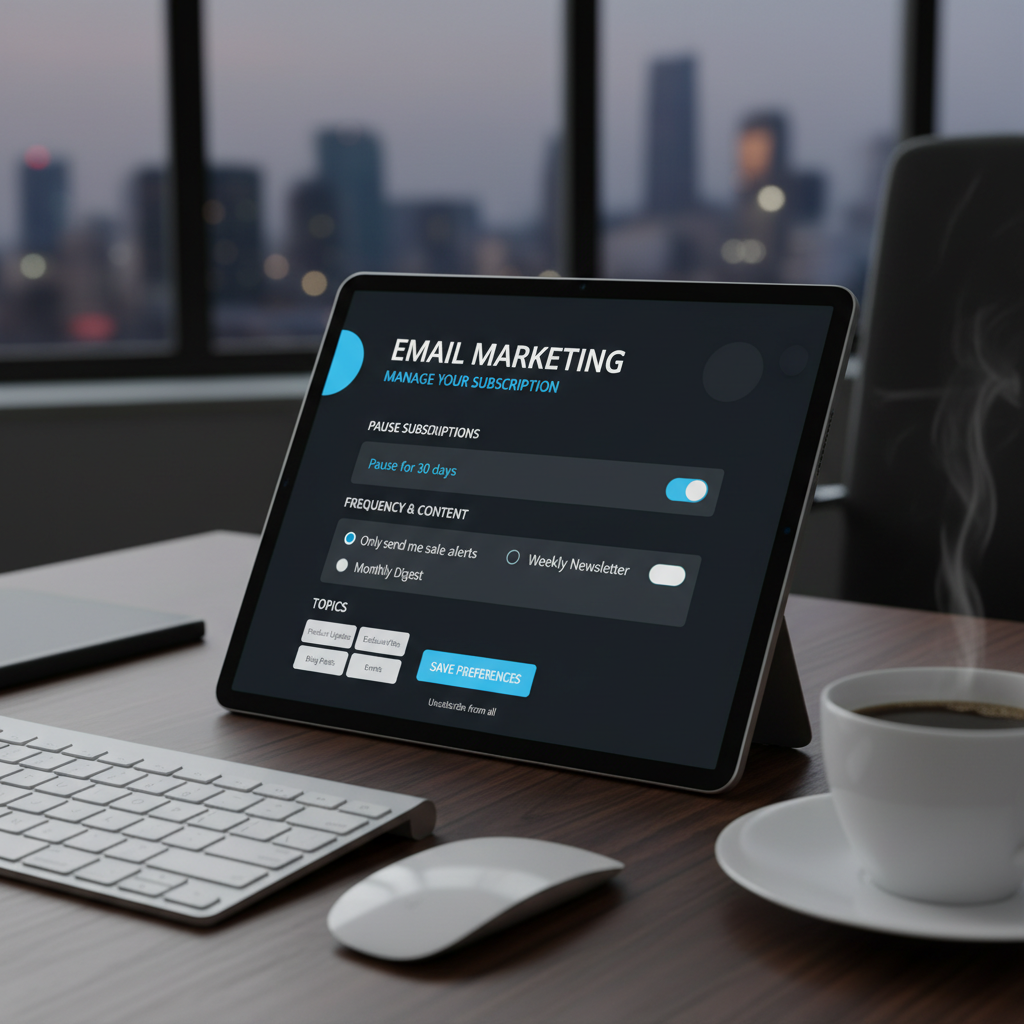
7. The "Preference Center" Pivot
Sometimes a user isn't dormant because they hate you; they're just overwhelmed. Instead of an "Unsubscribe" link, offer a "Snooze" button. Give them the option to pause emails for 30 days or choose to receive only monthly newsletters. It saves the relationship by respecting their boundaries.
Anatomy of the Perfect Win-Back Sequence
You can't rely on a single email. You need a sequence. Based on data from Flowium, here is a template that capitalizes on the fact that 45% of subscribers who receive a win-back email will engage with future content.
| Timing | Theme | Objective |
|---|---|---|
| Day 0 | The Gentle Nudge | "Is this still the best email for you?" Low pressure, checking for a pulse. |
| Day 3 | The Value Remind | "Here is what you missed." Highlight top content or product upgrades (like the Dell case study). |
| Day 7 | The Irresistible Offer | High-value incentive (e.g., $10 off or free shipping). This is the "Blue Nile" strategy. |
| Day 14 | The Break-up | "This is the last email." Inform them they will be unsubscribed if they don't click. |
Real-World Success Stories: Data from the Trenches
Theory is great, but results matter. Let's look at how major players are executing this.
Blue Nile (Jewelry): They identified customers who hadn't bought in 12 months and sent a "Push" campaign with a $50 incentive. The results were staggering: a 40% Open Rate and a 50% increase in revenue from that specific segment (Netcore Cloud).
Fetch & Funnel Client: For a retail client, they utilized an AI-reactivation campaign personalized by "cart abandonment" history for leads cold for over six months. This resulted in re-engaging 5,000 dormant leads in just three months (Fetch & Funnel).
Future-Proofing: Expert Predictions for 2025
I dove deep into what industry leaders are saying about the future of re-engagement to ensure this strategy lasts you through the year.
Scott Cohen of InboxArmy notes a shift in data usage:
"In 2025, the shift is from big data to actionable small data. Precise, customer-specific insights will outperform mass-scale analytics every time." — Scott Cohen, The CEO Views, March 2025
Meanwhile, Natalie Rockall sees AI taking a more hands-on role:
"AI will almost take on the role of an email marketing assistant – the everyday source of brainstorming, information gathering, and taking care of processes which take up valuable human time." — Natalie Rockall, Deployteq, Jan 2025
FAQ: Common Questions on Re-Engagement
What is a good open rate for a re-engagement campaign?
Don't expect your standard 30-40%. For a purely dormant list, an open rate of 10-12% is considered successful in 2025. The goal is to identify the living users, not to get everyone to click.
How long before a subscriber is considered dormant?
While 6 months was the standard, I recommend shortening this to 90 days for high-frequency senders (like daily newsletters). The sooner you catch the disengagement, the easier it is to win them back.
Does re-engagement improve sender reputation?
Absolutely. By identifying and removing truly dead emails (hard bounces and spam traps), you increase your overall engagement percentage. This signals to Google and Yahoo that you are a quality sender, improving deliverability for your active users.
Conclusion
Re-engaging dormant subscribers in 2025 isn't about magic tricks; it's about respect and relevance. It's about respecting the user's inbox enough to send timely, hyper-personalized content, and having the courage to remove those who have truly moved on.
Remember the data: list decay is inevitable—databases degrade by 22.5% every year according to WP Funnels. You cannot stop the bleed, but with the strategies outlined above—specifically the P.I.G. framework and AI optimization—you can patch the leak.
Don't let your hard-earned leads fade away into the digital void. Audit your list today, set up that win-back sequence, and turn those dormant contacts into revenue.