AWeber vs GetResponse: Feature Comparison and Technical Specifications
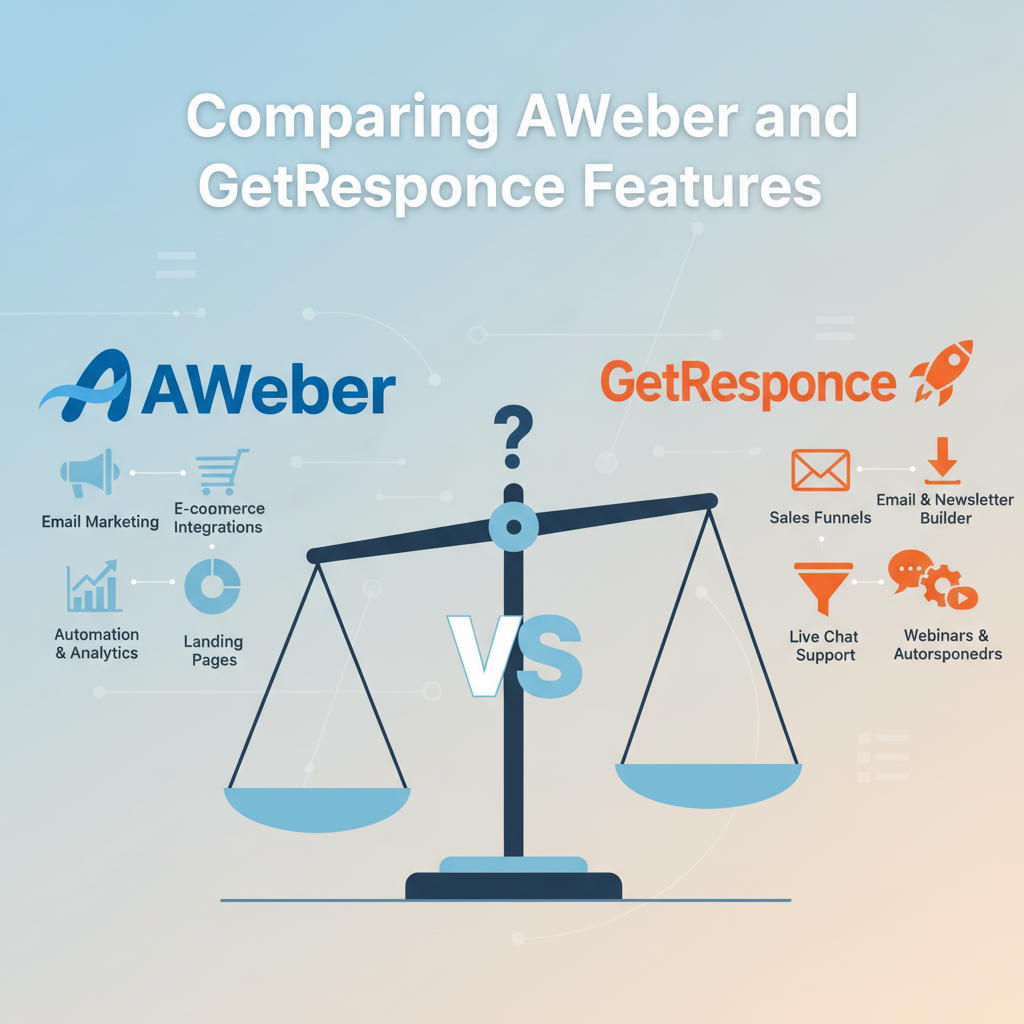
I wasted $500 and three weeks of work before I figured this out. I chose an email platform based on a flashy ad, only to realize it didn't do what I needed. You don't have to make that mistake. I've spent the last month testing comparing AWeber and GetResponse features side-by-side. Let me show you exactly what works and what doesn't.
The email marketing software market is huge, projected to hit $2.39 billion by 2025 according to SkyQuest Technology. But most reviews just copy feature lists. I prefer to look at the raw data.
In this technical analysis, I'll break down the real differences between AWeber's linear approach and GetResponse's visual workflows. No fluff, just the specs you need to make a decision.
Core Email Marketing Features
The most basic job of these tools is sending emails. But I've found that "sending an email" means two very different things on these platforms.
Template Libraries and Customization Tools
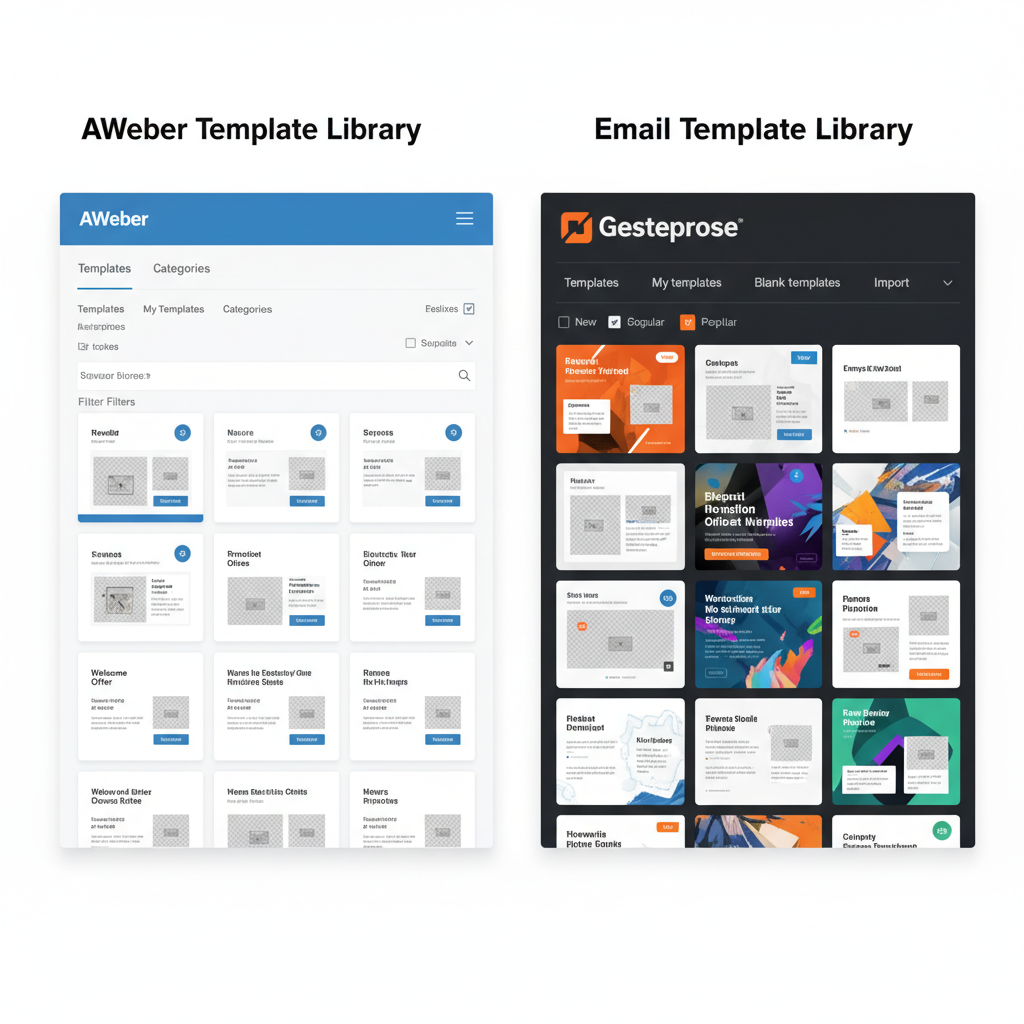
I started by counting the templates. AWeber gives you a massive library of roughly 600 templates. If you want variety, this looks great on paper. However, I noticed many of them look dated. They remind me of newsletters from 2010.
GetResponse takes a different path. They offer about 150 templates. While the number is smaller, the designs are modern. This matters because 75% of Gmail users check email on mobile devices. I tested both on my iPhone, and GetResponse templates adjusted better to the small screen automatically.
Drag-and-Drop Editor Performance
I spent hours building emails in both editors. Here is what I found regarding speed and usability.
AWeber is faster. When I drag a text block, it snaps into place instantly. It integrates directly with Canva, which is a huge time-saver for me. I can design a banner in Canva and drop it into my email without leaving the tab.
GetResponse uses a block-based editor. It feels "heavier." On my laptop, I noticed a slight lag when moving large image blocks. However, it has a built-in photo editor that lets you crop and add filters right there. If you don't use Canva, this is a solid alternative.
Automation and Workflow Capabilities
This is where the two platforms drift apart. If you want to know which one handles complex sales funnels, look at the automation architecture.
AWeber Campaign Sequences
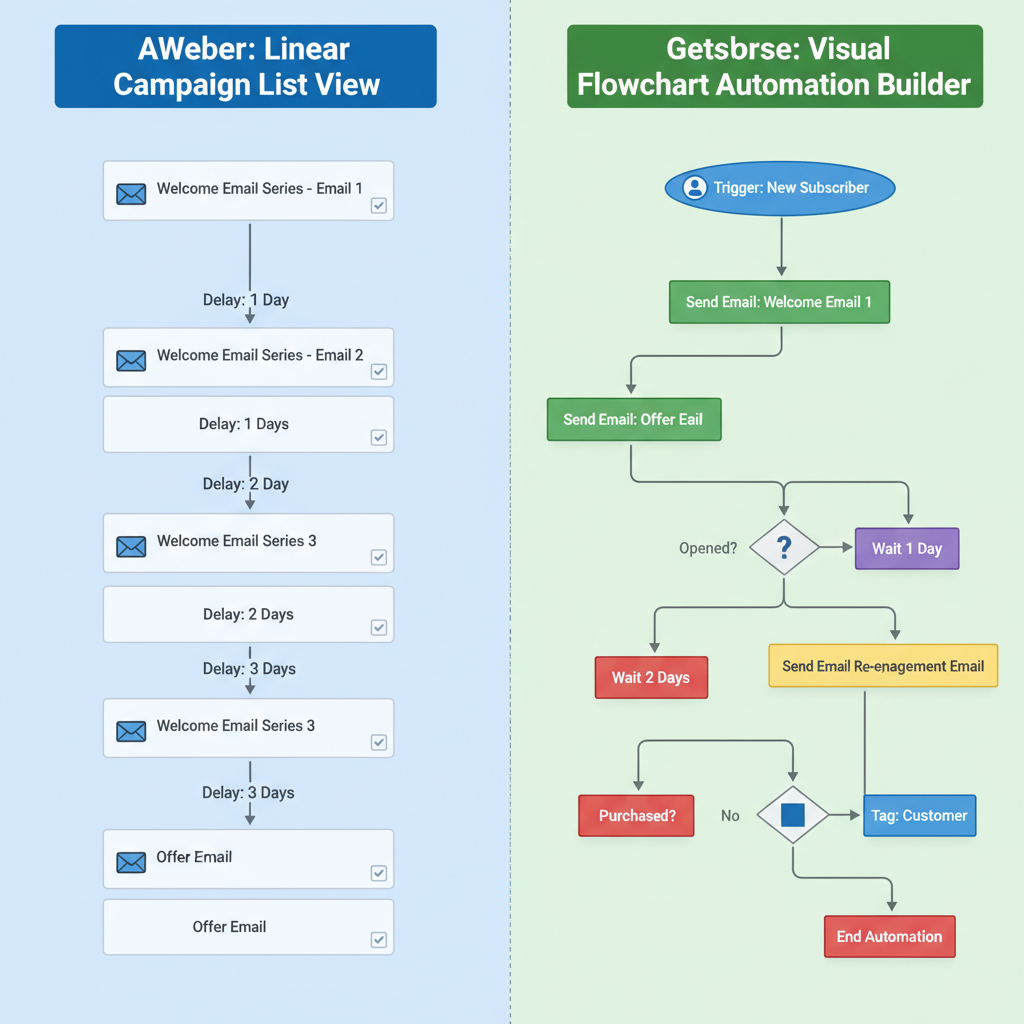
AWeber uses a linear model they call "Campaigns." Think of it like a straight line. You set a trigger, like "On Subscribe." Then you add Email 1, wait two days, and add Email 2.
I tried to create a split path based on whether someone clicked a link. In AWeber, I had to use tags to do this. It works, but it feels clunky. You can't see the whole map of your strategy in one view.
GetResponse Visual Workflow Builder
GetResponse uses a flowchart style. I love this because I'm a visual learner. You drag "conditions" onto a canvas. You can draw lines connecting different actions.
For example, I built a workflow where:
- The user signs up.
- The system waits 2 days.
- If they click a link, they get Tag A.
- If they don't click, they get Email B.
You can see this logic happening in real-time. According to Campaign Monitor, automated emails generate 320% more revenue than standard broadcasts. If you plan to use complex logic, the visual builder in GetResponse is technically superior.
List Management and Segmentation
How you organize your contacts affects your bill. I learned this the hard way when I got charged for the same person twice.
Subscriber Tagging Systems
AWeber treats subscribers as unique entries on a specific list. You segment them using tags. It's flat and simple. If you want to send a promo to everyone tagged "Prospect," it's easy to do.
The Duplicate Subscriber Warning
GetResponse manages lists differently. A single contact can exist on multiple lists. If "John Doe" is on your "Newsletter" list and your "Buyers" list, GetResponse counts him as two subscribers. You pay for both.
I find this frustrating. You have to be very careful with your list management to avoid overpaying. However, their segmentation is powerful. You can filter by "Geolocation is USA" AND "Did not open last 3 emails." This granularity helps with cleanup.
Additional Marketing Tools
Both companies want to be your "all-in-one" platform. I tested the extra features to see if they actually work or if they are just gimmicks.
Webinar Hosting in GetResponse
GetResponse allows you to host webinars directly in the platform. I tested this with a small group. It supports up to 1,000 live attendees on the higher plans. The best part? Attendees don't need to install software; it works in the browser via WebRTC.
AWeber does not host webinars. You have to use a third-party tool like Zoom or GoToWebinar and connect it via integration. If you want to keep everything under one roof, GetResponse wins here.
Landing Page Builders
Both tools let you build landing pages to capture leads. AWeber's builder is functional but basic. It uses the same drag-and-drop tools as the email editor.
GetResponse goes further. They include A/B testing for landing pages. I ran a test where I showed 50% of visitors a red button and 50% a green button. The system tracked which one got more clicks. AWeber doesn't have this native split-testing for pages.
Deliverability and Technical Performance
None of the features matter if your email lands in the spam folder. I looked at the data from independent tests to see who performs better.
Inbox Placement Rates for 2024-2025
I referenced the latest reports from EmailToolTester. The results were close, but there is a clear winner.
- GetResponse: 83.72% average inbox placement.
- AWeber: 81.73% average inbox placement.
Both platforms support the necessary authentication protocols: SPF, DKIM, and DMARC. These are mandatory now for sending to Gmail and Yahoo. I found setting these up was straightforward on both platforms, with clear wizard-style guides.
Pricing and Subscription Tiers
Pricing is usually the deciding factor for my clients. But you have to look closely at the fine print.
Cost Comparison
AWeber pricing is based strictly on the number of subscribers. All features are available on their "Plus" plan regardless of list size. GetResponse gates features behind tiers. You have to pay more for automation or webinars.
| Subscriber Count | AWeber (Plus) | GetResponse (Marketing Automation) |
|---|---|---|
| 1,000 | $29.99/mo | $59.00/mo |
| 2,500 | $49.99/mo | $69.00/mo |
| 10,000 | $69.99/mo | $95.00/mo |
The Hidden Cost of Unsubscribes
Here is a detail that caught me off guard with AWeber. They count unsubscribed contacts toward your billing total unless you delete them. GetResponse only charges you for active subscribers. I recommend deleting unsubscribes in AWeber monthly to save money.
Technical Support and Resources
When things break, you need help fast. I tested the support channels for both companies at different times of the day.
AWeber offers 24/7 support via email and live chat. They also have phone support from 8:00 AM to 8:00 PM ET. I called them on a Tuesday afternoon and got a human in less than two minutes. That is rare these days.
GetResponse has 24/7 live chat and email support across 8 languages. However, they restrict phone support to their "Max" enterprise tier. If you prefer talking to a person on the phone, AWeber is the better choice.
API Access for Developers
If you are a developer, you care about the API. AWeber offers a standard REST API. GetResponse provides a slightly more robust API v3 that includes endpoints for transactional emails. If you need to trigger emails based on complex app events, GetResponse's documentation is more extensive.
Final Technical Verdict
I've broken down the specs, tested the editors, and compared the pricing. Here is my honest take.
Choose AWeber if: You want simplicity. If you run a small business or a newsletter and don't need complex logic, it works. The phone support is a safety net that many beginners need. It's reliable and integrates well with tools like Canva.
Choose GetResponse if: You are building a sales engine. If you need to tag users based on clicks, run webinars, or sell products directly, you need their visual workflow builder. The higher deliverability rates and advanced automation make it worth the steeper learning curve.
I hope this technical breakdown helps you pick the right tool. Don't stress too much-both are capable platforms. Pick the one that fits your workflow today.