How to Build a Viral Referral Program That Ethically Explodes Your Email List (Step-by-Step)
You’ve probably heard the story of Morning Brew. They didn't just stumble their way from zero to 2.5 million subscribers; they engineered it. They turned their readers into their sales team using a simple progress bar and some stickers.
But here’s the thing that keeps most creators up at night: How do you replicate that viral growth without looking like a spammy pyramid scheme?
In my years working with newsletter growth strategies, I've seen the landscape shift dramatically. Ad costs are rising, and "cookie depreciation" is killing third-party targeting. The only asset you truly own is your email list. Yet, most people treat referrals as an afterthought—a nice-to-have rather than a core engine.
This isn't just about handing out free t-shirts. It's about psychology, mathematics, and trust. If you implement this correctly, you stop renting your audience from Zuckerberg and Musk, and you start building a self-sustaining ecosystem.
In this guide, I’m going to walk you through the exact roadmap: from the "K-Factor" math that dictates virality to the ethical safeguards that keep your sender reputation pristine.

The Mechanics of Virality: Understanding the K-Factor
Before we pick rewards or write code, we have to talk about math. I know, I know—you got into content creation to avoid algebra. But understanding one simple formula is what separates a program that fizzles out from one that explodes.
It’s called the Viral Coefficient (K).
What is the Viral Coefficient?
The formula is surprisingly simple: i × c = k
- i = The number of invites sent by each existing user.
- c = The conversion rate of those invites (percentage who sign up).
- k = The Viral Coefficient.
According to growth expert Andrew Chen, for a project to be truly viral, K must be greater than 1.0. If K is 1.1, your growth becomes exponential. If it's 0.9, your growth will eventually plateau without outside marketing.
Viral Growth Calculator
Use this tool to see if your current metrics would lead to viral growth.
Why "Ethical" Matters for Virality
You might look at that math and think, "I'll just force people to spam their contacts to unlock content."
Don't do that.
Forced virality destroys trust. When users feel manipulated, they leave. More importantly, aggressive referral tactics can trigger spam filters, ruining your email deliverability. A 2021 Nielsen report confirms that 92% of consumers trust referrals from people they know—but that trust hinges on the referral being genuine, not forced.
Step 1: Choosing the Right Incentive Structure (The "Ethical Bribe")
Jonah Berger, author of Contagious, famously said, "Virality isn’t born, it’s made. People share when it makes them look good to others." This concept is known as Social Currency.
Your incentive needs to make the referrer look smart, cool, or helpful. If the reward is just "money," it becomes transactional. If the reward is status or exclusivity, it becomes emotional.
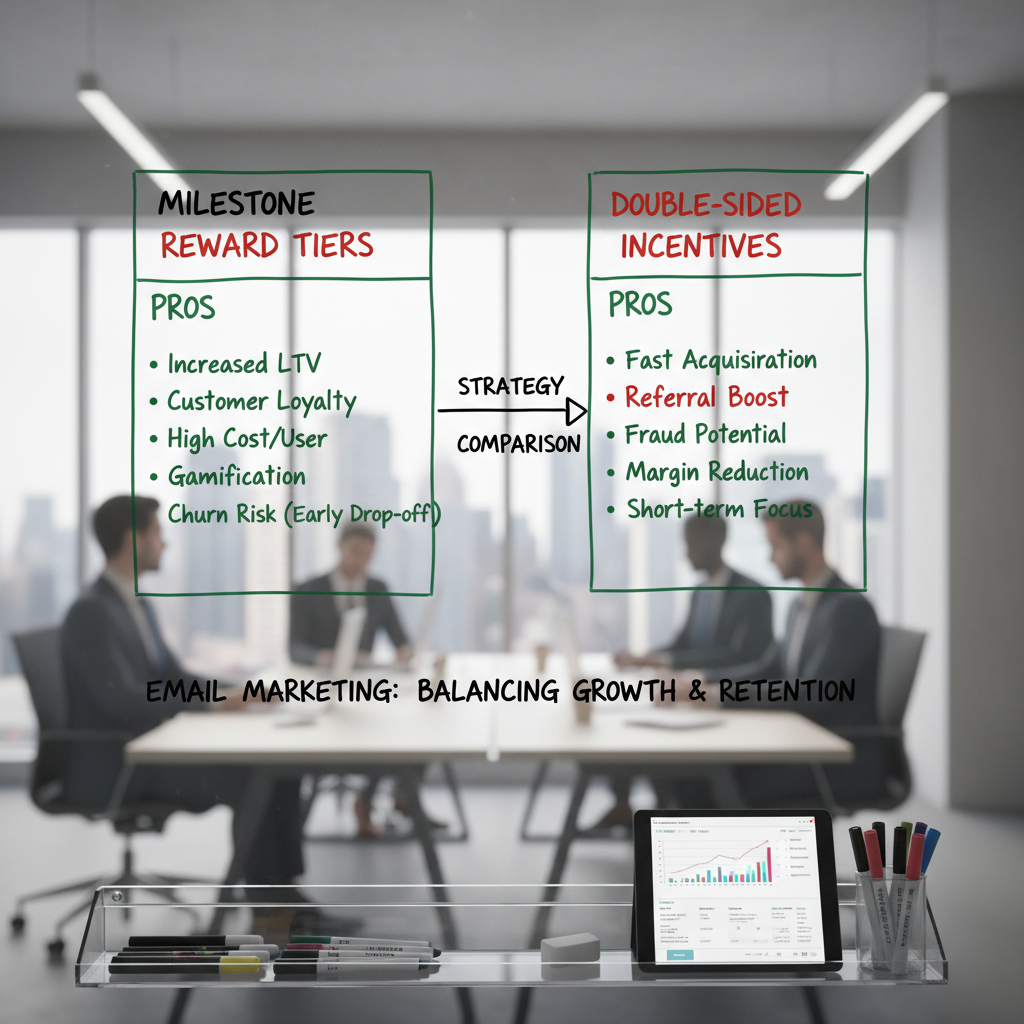
The Milestone Model vs. Double-Sided Rewards
There are two primary structures I recommend, depending on your business model:
- The Milestone Model (Best for Newsletters): This is the Morning Brew method.
- 3 Referrals: Exclusive PDF/Guide.
- 10 Referrals: Stickers/Mug.
- 25 Referrals: T-Shirt.
- 50 Referrals: Private Community Access.
- Double-Sided Rewards (Best for SaaS/Products): This is the Dropbox method. Dropbox grew 3900% in 15 months by giving 500MB to the referrer and 500MB to the friend. Source: Y Combinator.
Digital vs. Physical Rewards
In my experience working with bootstrapped creators, physical swag is a logistical nightmare. Shipping t-shirts globally kills your margins.
My advice? Start digital. Tyler Denk, CEO of Beehiiv and the guy who built Morning Brew’s tech, noted in interviews that their "Sunday Light Roast" (exclusive content) was often a bigger driver than the physical goods. Exclusive content has zero marginal cost of replication. It is pure profit.
Step 2: Designing the "Viral Loop" User Journey
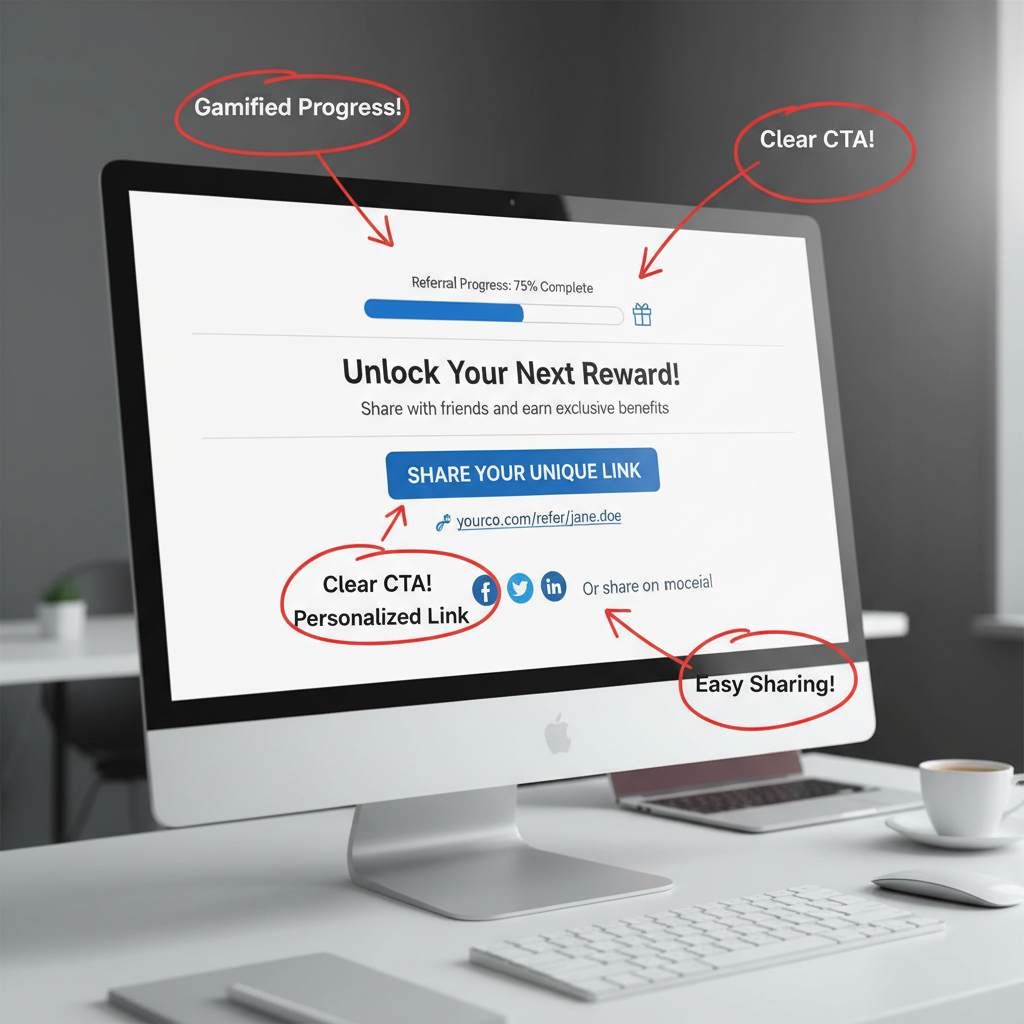
You have your math, and you have your reward. Now, where do you put the link? The goal is to reduce friction. Every click required to share reduces your conversion rate by half (a rough rule of thumb I've seen hold true across dozens of campaigns).
The Trigger: Placement Strategy
Do not hide your referral link in a "settings" menu. It needs to be omnipresent but unobtrusive.
- The Footer: A permanent, personalized link in every email. "Your unique link: [link]."
- The Dedicated Send: Once a quarter, send an email solely about the referral program.
- The "High-Emotion" Moment: The best time to ask for a referral is right after you've delivered value. Did they just finish reading a deep-dive article? Ask then.
The Frictionless Share
If a user clicks your link, they should land on a page with pre-populated messages. Don't make them write the email. Provide one-click buttons for WhatsApp, Email, and SMS.
Pro Tip: Ensure the message they share sounds like a human wrote it, not a marketing bot. "Hey, I found this great newsletter and thought of you" converts infinitely better than "Click here to sign up for XYZ Corp."
Step 3: Technical Implementation (Tools & Platforms)
You do not need to code this from scratch. In fact, unless you are a venture-backed startup with a dedicated engineering team, you shouldn't code this from scratch.
Newsletter-First Tools
If you are on an email platform like ConvertKit or Mailchimp, you need an integration.
- SparkLoop: The industry leader for newsletters. It integrates seamlessly and handles the "Milestone" tracking automatically.
- Beehiiv: If you use Beehiiv as your ESP, the referral program is built-in natively (no extra cost). This is what I currently recommend for new creators.
SaaS & E-commerce Tools
- Viral Loops: Extremely powerful, offers templates for the "Dropbox style" referral, contests, and waitlists.
- Friendbuy: Heavy-hitter for e-commerce, used by brands like Dollar Shave Club.
Step 4: Promoting Your Program Without Being Spammy
This is where the "Ethical" part of our title really comes into play. How do you promote this without annoying your list?
The "Kickoff" Campaign
When you launch, send a dedicated email explaining why you are doing this. Be transparent. "We want to grow so we can hire more writers and produce better content. To do that, we need your help. In exchange, here is some cool stuff."
Using "Nudges"
I’m a huge fan of the P.S. line. It’s the second most-read part of any email (after the headline). A simple "P.S. You’re only 1 referral away from the free ebook" is highly effective and non-intrusive.
Step 5: Preventing Fraud and Maintaining List Hygiene
Here is the dark side of viral programs: The Bots.
If you offer a $20 gift card for referrals, you will get thousands of fake email signups from click farms. This will destroy your open rates and sender reputation.
Defense Mechanisms
- Double Opt-In (DOI): This is non-negotiable for referral programs. The referred friend must click a confirmation link in their email before the referral counts. This stops 99% of bots.
- Cap the Rewards: If you are giving away something with a hard cost, cap the number of referrals a single user can generate per month.
- List Cleaning: Regularly scrub inactive subscribers. According to a Deloitte report, customers acquired through referrals have a 37% higher retention rate, but you still need to prune the ones who don't engage to keep your deliverability high.
FAQ: Common Questions on Referral Programs
Is a referral program a pyramid scheme?
No. A pyramid scheme requires participants to pay money to join and earn money primarily by recruiting others. A referral program is a marketing tactic where existing happy users are rewarded for introducing new users to a free or paid product. No money changes hands from the referrer to the company to join.
How much should I spend on rewards?
A good rule of thumb is that your Customer Acquisition Cost (CAC) through referrals should be lower than your CAC through paid ads. Research from the Wharton School of Business indicates that referred customers have a 16% higher Lifetime Value (LTV). If your user LTV is $100, spending $10-$15 on a referral reward is a very safe investment.
What if I don't have a budget for incentives?
Use "Access" instead of "Stuff." Private Zoom calls with you, early access to articles, or a "shoutout" in the newsletter are free for you to give but high value to a loyal fan.
How do I know if it's working?
Monitor your "Viral Uplift." If you get 1,000 new subscribers from organic sources, and your referral program generates an extra 150, your uplift is 15%. Benchmarks vary by industry, but anything over 10-15% is considered a success for newsletters.
Conclusion
Building a viral referral program isn't about luck. It's about reducing friction and aligning incentives so that your readers feel proud to share your work.
Remember the three pillars we discussed:
- Incentive: Make it desirable (and preferably digital).
- Ease: Make the share button impossible to miss.
- Automation: Use tools like SparkLoop or Viral Loops so you don't drown in spreadsheets.
The days of cheap Facebook ads are over. The era of community-led growth is here. Your next 10,000 subscribers are likely already known by your current 1,000 subscribers. You just have to give them a reason to make the introduction.