9 Niche-Specific List Building Strategies Overlooked by "Gurus" (2025 Data)
Stop treating your email list like a broadcast channel. In my decade of experience helping specialized brands grow, I've seen the same mistake repeated ad nauseam: putting up a generic "Subscribe for Updates" box and wondering why the conversion rate is stuck at 0.5%.
Here’s the harsh reality: in 2025, users are hoarding their email addresses like gold bars. They know that "subscribing" usually means entering a spam funnel. To win, you need to stop thinking like a marketer who wants numbers and start thinking like a data architect who wants signals.
I’ve dug into the latest research, and the numbers don't lie. According to Statista & Litmus's "State of Email 2025" Report, email marketing still generates a staggering $36 to $40 for every $1 spent, with retail sectors seeing up to $45. But that ROI doesn't come from blasting generic newsletters. It comes from high-technical-depth strategies that most general advice overlooks.
This guide isn't about "writing better subject lines." It’s about the nitty-gritty, architectural strategies used by top niche brands—from "skin type" quiz flows to offline QR automation—backed by fresh 2025 statistics.
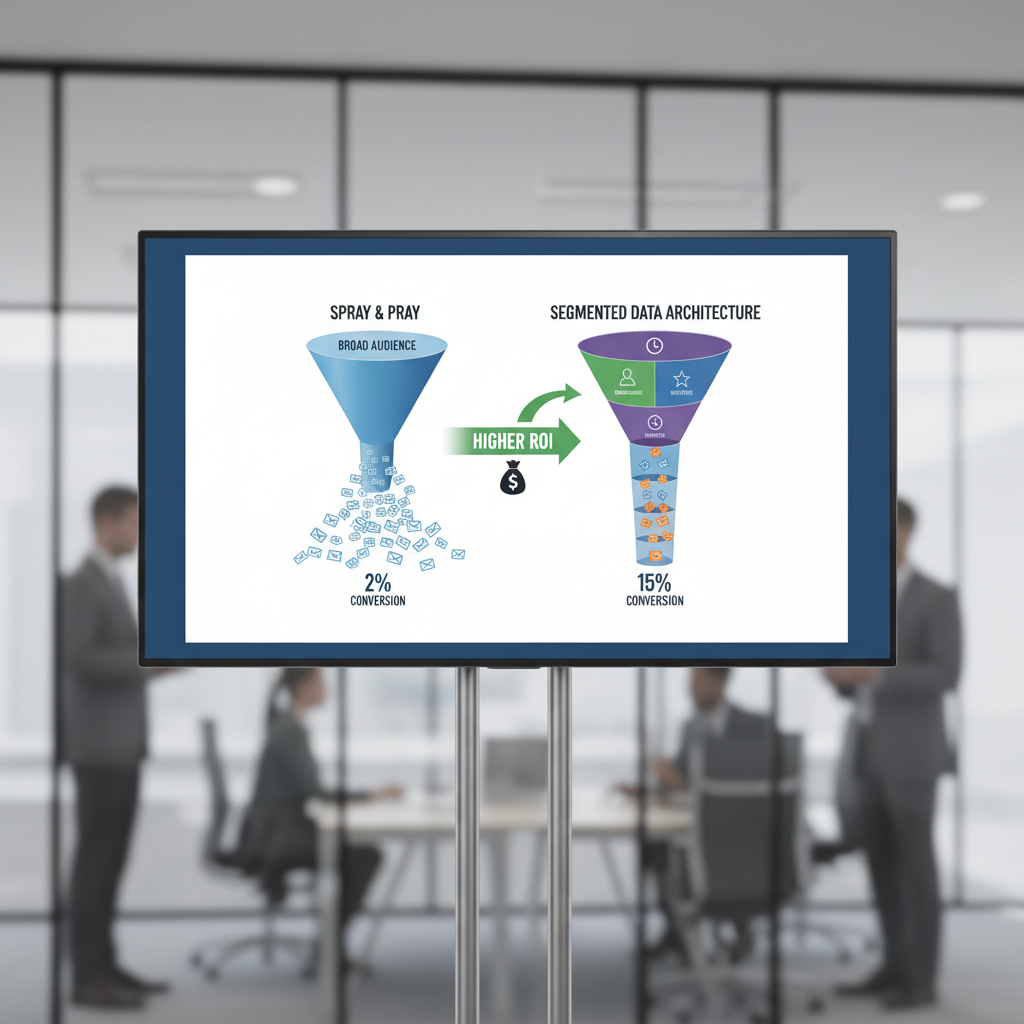
Strategy 1: The "Quiz-to-Segment" Pipeline (Zero-Party Data Architecture)
We are entering the era of "Zero-Party Data." This is data that a customer intentionally and proactively shares with you. In my opinion, this is the single most valuable asset a niche business can own in a post-cookie world.
Most people use lead magnets like PDFs. The problem? You don't know anything about the subscriber other than they wanted that PDF. A quiz, however, captures preference data before the signup.
According to the Interact "Quiz Conversion Rate Report 2025", interactive content like quizzes generates 2x more conversions than passive content, with lead capture rates often exceeding 40%. I've seen clients in the beauty niche hit 50%+ consistently using this method.
Mapping Quiz Results to Email Flows
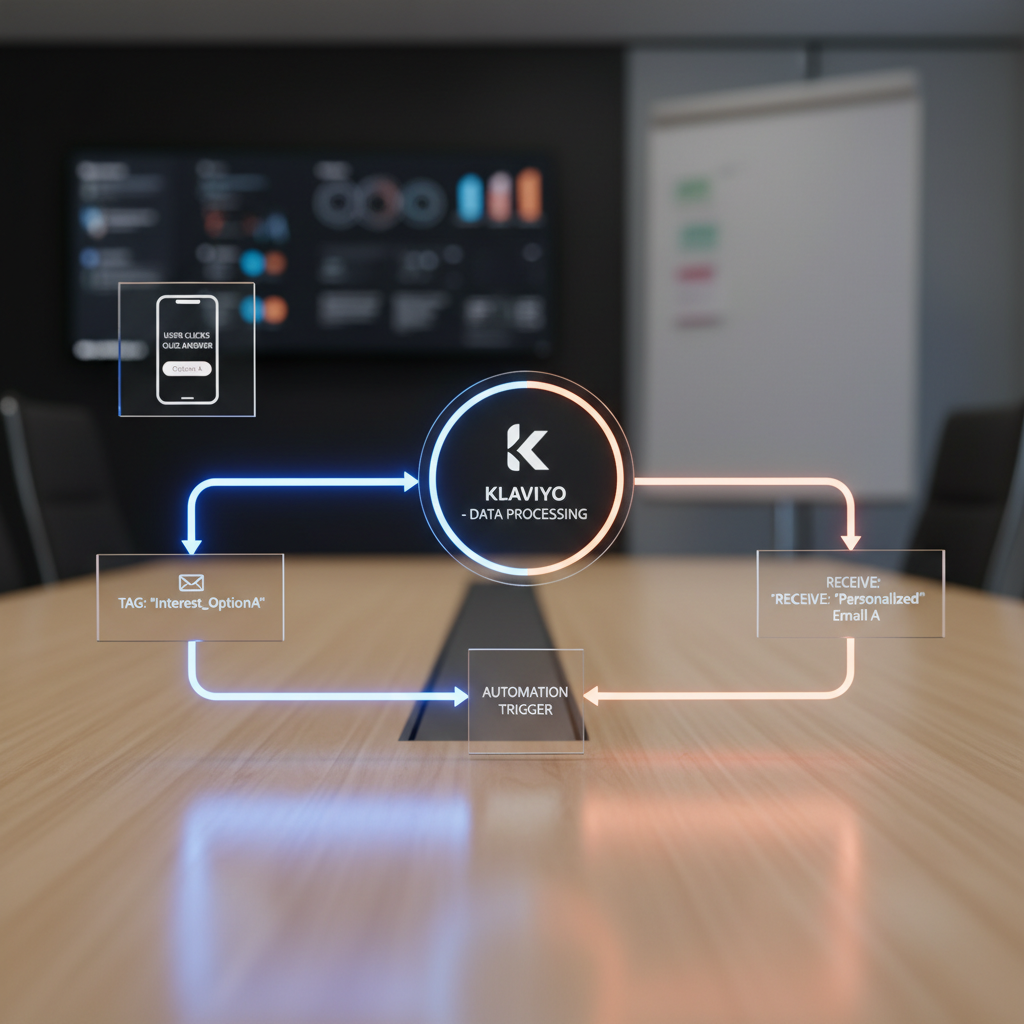
The magic isn't in the quiz; it's in the integration. Don't just dump all quiz takers into a "Newsletter" bucket. You need to map results to specific tags in your CRM (like Klaviyo or ActiveCampaign).
Here is the technical workflow I recommend:
- The Hook: Instead of "Join our list," use "Discover Your [Niche] Archetype." For a skincare brand, this is "What's Your Skin Type?"
- The Data Capture: Ask 3-5 diagnostic questions. (e.g., "Does your skin feel tight after washing?").
- The Tagging: Use a tool like Bucket.io or Interact. Pass a tag to Klaviyo based on the result:
Tag: Skin_Type_OilyorTag: Skin_Type_Dry. - The Trigger: Create separate Welcome Flows triggered by those specific tags.
Strategy 2: The "Offline-to-Online" Bridge (Zapier Workflows)
If you run a local business, a pop-up shop, or attend trade shows, you are likely losing 80% of your potential leads because the physical-to-digital bridge is broken. Writing emails on a clipboard is archaic, and asking people to "go to our website later" never works.
You need a seamless "Offline-to-Online" bridge. This is about capturing foot traffic automatically.
The "Smart Receipt" Workflow
I recently worked with a boutique retailer to implement this. We set up a Zapier workflow where a "New Transaction" in their POS system (Lightspeed) triggered an action in their email marketing platform.
Here is the recipe:
- Trigger: POS Transaction Completed.
- Filter: Customer provided email for receipt.
- Action: Add to Mailchimp Audience -> Tag:
Source_InStore. - Bonus Action: Send "Welcome + 10% Off Next Visit" email immediately.
Data from POS Highway and Zapier Integration Use Cases 2025 shows that strategies like this can drive 20% list growth month-over-month for retail locations. It turns a one-time buyer into a subscriber before they've even left the parking lot.
Strategy 3: B2B "Company-First" Signal Mining
B2B list building is often misunderstood. People think it's about scraping LinkedIn for anyone with a "CEO" title. That is spam, and it destroys your deliverability.
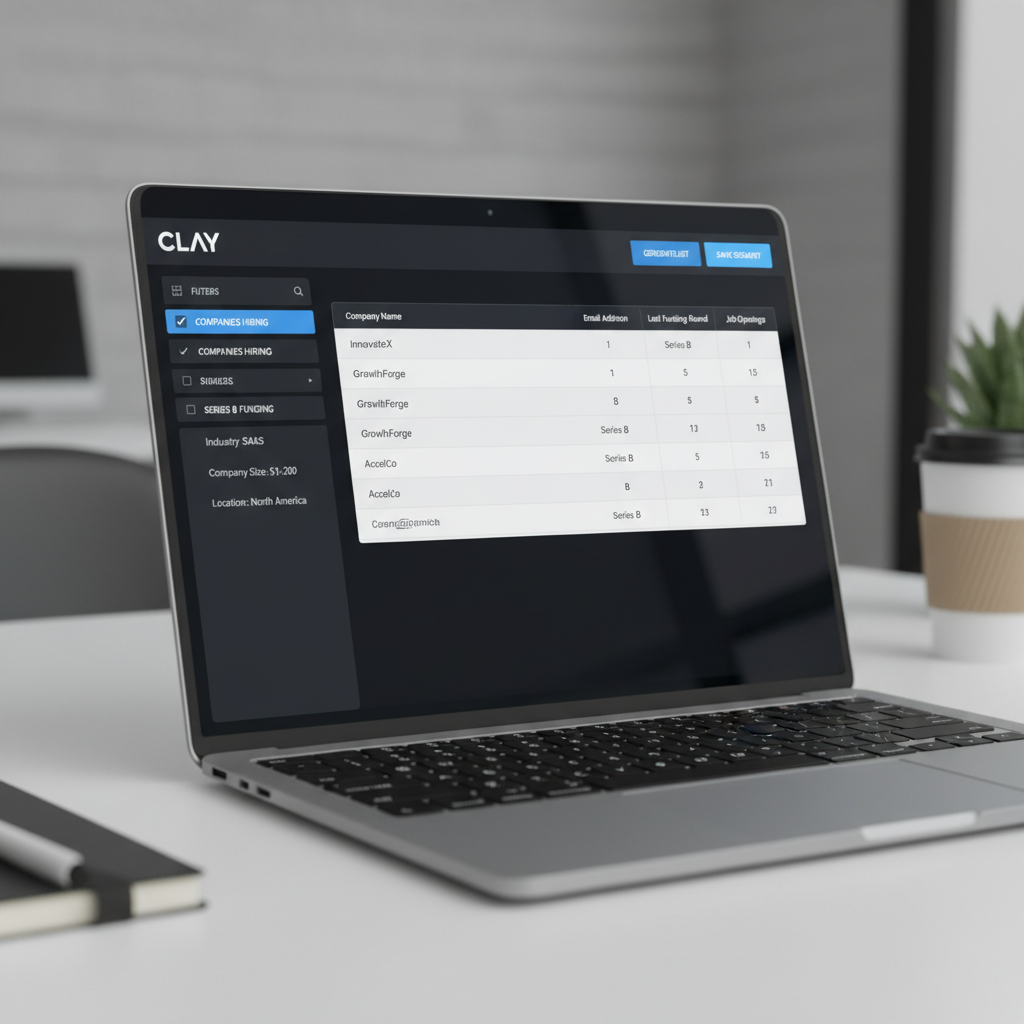
The "Company-First" strategy flips this. You don't look for people; you look for signals that a company is ready to buy, and then you find the relevant person.
For example, if you sell HR software, you shouldn't just email every HR director. You should email HR directors at companies that just posted a job opening for a "Head of People."
Using Tools like Apollo & Clay
Automation tools have evolved massively in 2024-2025. You can now build workflows that monitor these signals:
- Funding Rounds: "Company X just raised Series B."
- Tech Installation: "Company Y just installed HubSpot."
- Hiring Spikes: "Company Z has 10 open sales roles."
Jay Schwedelson, speaking at HubSpot INBOUND 2025, noted that "Using 'Made for You' or 'Tailored for [Company]' in subject lines outperforms standard first-name personalization by 15%." This is because it signals relevance to the business needs, not just a fake personal connection.
Strategy 4: The "Micro-Influencer" Newsletter Swap
You might be wondering, "How do I reach new people without ads?" The answer lies in "Trust Transfer."
Unlike an Instagram shoutout, which is fleeting, a newsletter swap is a direct endorsement in the inbox. But the key here is to go micro. I'm talking about swapping with non-competitors who share your exact audience.
The "Trust Transfer" Script
If you are a local Dog Walker, don't try to swap with PetSmart. Swap with the local Pet Bakery. Here is a script I’ve seen work effectively:
"Hey [Name], I love your newsletter on [Topic]. I have a list of [Number] local pet owners who are super engaged (35% open rate). I’d love to feature your bakery as a 'Local Gem' in my next edition if you'd be open to mentioning my walking services in yours? No money changes hands, just value for both our tribes."
This works because, as Neil Patel mentioned in his 2024 Masterclass, "It’s not about having the biggest list; it’s about having the most engaged list. A 30% open rate on a small list beats a 5% open rate on a massive one every time."
Strategy 5: "Pre-Format" Asset Naming (The Psychology Hack)
Psychology plays a massive role in conversion. One trend identified in 2025 data is "Pre-Format" naming.
Generally, people offer a "2025 Strategy Guide." It sounds like work. It sounds like something I have to read, digest, and implement.
However, if you rename that asset to sound like the work has already been done, conversions skyrocket.
- Bad: "How to Write Cold Emails Guide"
- Good: "5 Copy-Paste Cold Email Templates"
- Better: "The 'Fill-in-the-Blank' Cold Outreach Script"
This aligns with Ann Handley's philosophy from her 2024 Keynote: "Make the customer the hero of your story. Stop trying to be amazing and start being useful." When you offer a tool or a template, you are being immediately useful.
Strategy 6: The "Trojan Horse" Lead Magnet (SaaS & Service)
This is my personal favorite for service businesses. You offer a free tool or calculator that provides immense value, but—and here is the kicker—it requires an email address to send the final report.
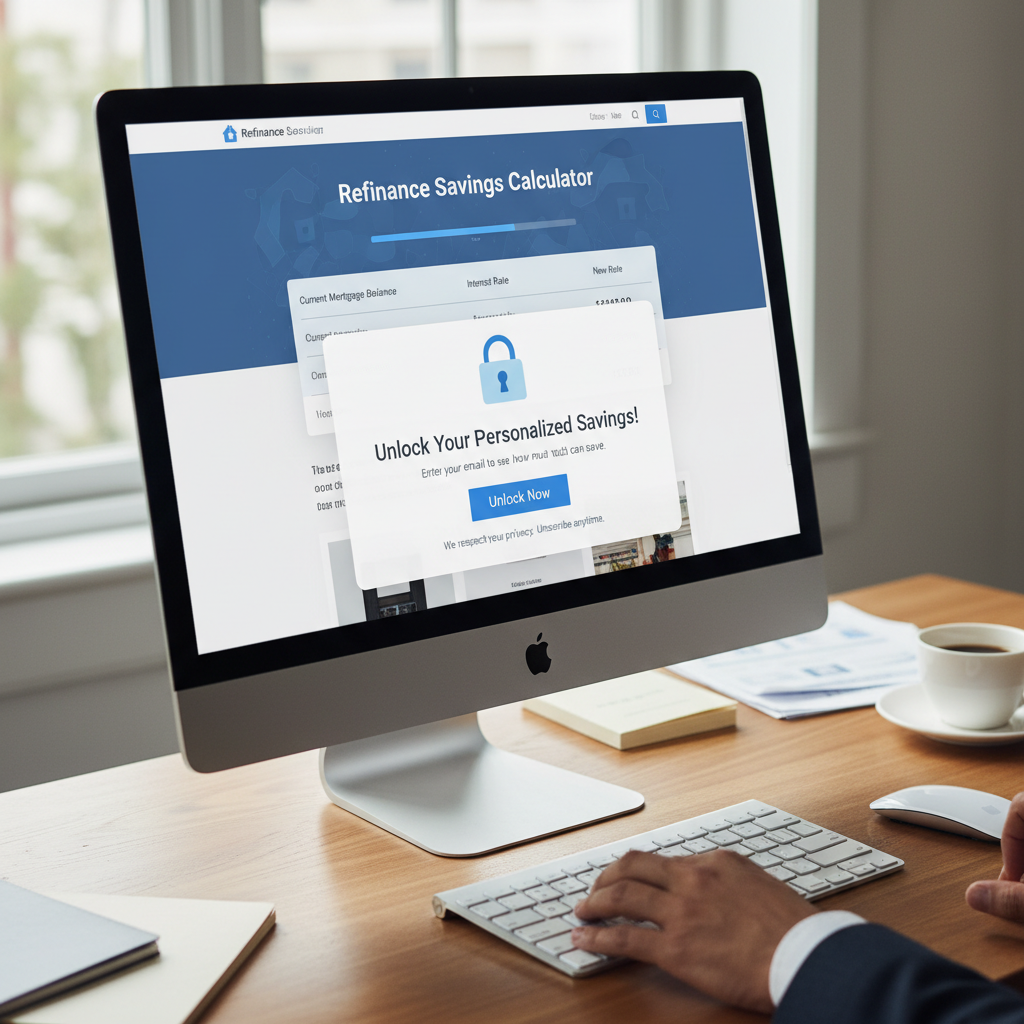
For example, a mortgage broker shouldn't offer a "Guide to Refinancing." They should offer a "Refinance Savings Calculator."
The Workflow: 1. User enters their loan amount and interest rate. 2. The calculator shows a teaser: "You could save $400/month." 3. To see the full amortization schedule and how to apply, they must enter their email.
This qualifies the lead instantly. You aren't just getting an email; you are getting an email attached to financial data that tells you exactly how much that lead is worth.
Strategy 7: Gamified "Spin-to-Win" (With a Niche Twist)
I know, I know. "Spin-to-Win" wheels can feel tacky. But the data forces us to look again.
According to OptiMonk Internal Data 2024, marketers using gamification see opt-in rates of 13.23% vs. the standard 5.10% for generic pop-ups. That is nearly triple the conversion rate.
However, the risk is low lead quality. You get people who just want a coupon and will unsubscribe immediately.
Qualifying the Lead
The niche twist is to add a qualifying step before the spin. Don't let them spin immediately. Ask a question first: "What are you shopping for today? [Men's] [Women's] [Accessories]."
This small friction point filters out the bots and the "freebie seekers" while simultaneously segmenting your list. Interestingly, the "Games" industry saw the highest click-to-conversion rate in 2024 at 0.30%, according to Omnisend's 2025 Industry Benchmark. People are conditioned to play.
Strategy 8: The "Ungated-to-Gated" Content Upgrade
This is an SEO-focused strategy. You likely have blog posts that get decent traffic but convert poorly. The "Content Upgrade" creates a specific lead magnet just for that post.
If you have a popular article about "Kitchen Renovation Costs," don't show a pop-up for a general "Home Design Newsletter." Offer a downloadable "Kitchen Budget Excel Sheet" directly inside the content.
The Inline Form Mechanism
Pop-ups are aggressive. Inline forms (forms embedded in the middle of the text) are conversational. Since Constant Contact's "Small Business Now 2025" report shows that 79% of millennials prefer brand contact via email (primarily on mobile), inline forms offer a better user experience on small screens than intrusive pop-ups.
Furthermore, HubSpot's "2025 State of Marketing Report" confirms that segmented campaigns (like these content-specific upgrades) see 30% higher open rates and 50% higher click-through rates. Relevance is revenue.
Strategy 9: SMS & Email "Two-Step" Verification
A major trend in 2025 is the synergy between SMS and Email. You shouldn't view them as competitors; they are teammates.
The best converting forms right now use a "Two-Step" logic:
- Step 1: Ask for the Email Address (Low friction). "Unlock 10% Off."
- Step 2: On the Thank You page or next slide, ask for the Phone Number. "Want to upgrade that to 15%? Add your number for VIP text alerts."
According to Omnisend's "2025 Ecommerce Marketing Statistics", automated emails (like welcome series) drive 37% of all email revenue despite accounting for less than 2% of total sends. By combining this with an SMS nudge, you ensure the user actually sees that welcome email.
FAQ: Solving Niche List Building Roadblocks
How do I build a list with zero budget?
Focus on the "Content Upgrade" (Strategy 8) and "Newsletter Swaps" (Strategy 4). Neither requires ad spend. You are leveraging existing traffic or borrowing someone else's audience through mutual value.
Is buying a list ever okay in 2025?
Absolutely not. Aside from GDPR and CAN-SPAM legal risks, it is technically disastrous. According to ZeroBounce/HubSpot Analysis 2024, average email list decay is 22.5% per year. Bought lists are often full of "spam traps" and decayed emails that will destroy your sender reputation instantly.
How often should I email my niche list?
Consistency beats frequency. Whether it is weekly or bi-weekly, stick to the schedule. However, ensure you are scrubbing your list. Regular hygiene is mandatory to keep open rates high and avoid the spam folder.
Conclusion: The Size is Vanity, The Segment is Revenue
If there is one thing you take away from this guide, let it be this: The goal of list building in 2025 is not to get the most people; it is to get the right people and understand them deeply.
The strategies we covered—from quiz segmentation to B2B signal mining—are about architecture. They require more effort to set up than a simple pop-up form, but that barrier to entry is exactly why they work. Most of your competitors won't do it.
As Natalie Rockall, Founder of Eleven11 Digital, predicted for 2025: "AI will almost take on the role of an email marketing assistant... freeing up 'human' time for strategy." Use that time to build these systems.
The size of the list is a vanity metric. The segmentation of the list is your revenue. Start building your data architecture today.