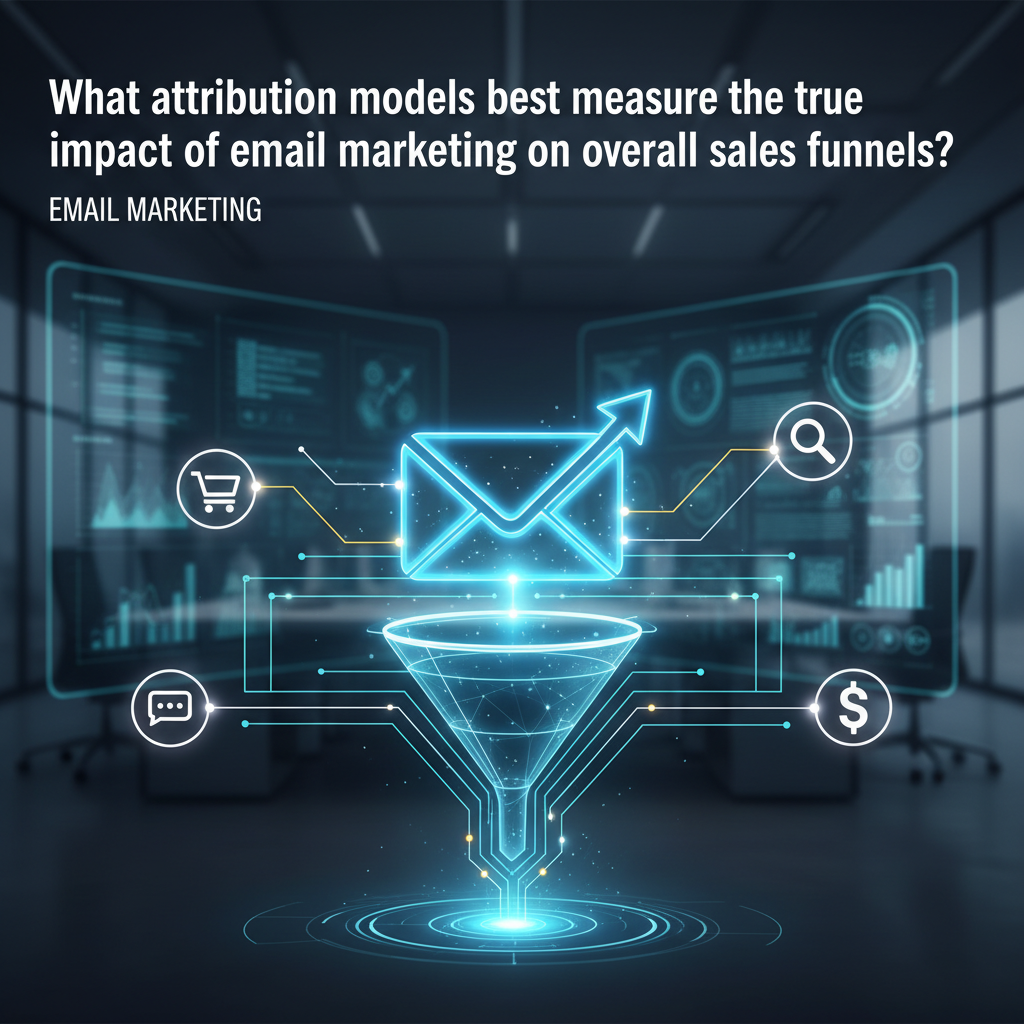
What Attribution Models Best Measure the True Impact of Email Marketing on Overall Sales Funnels?
Stop letting "Last-Click" steal credit from your email campaigns. In 2025, relying on single-touch attribution is like thanking the cashier for cooking your meal—it ignores the entire process, the ingredients, and the chef that made the sale possible. If you are still judging your email performance solely by who clicked a link and bought immediately, you are likely severely undervaluing your marketing efforts.
I’ve seen marketing teams slash their newsletter budgets because the "data" showed low conversion rates, only to see their overall revenue nose-dive two months later. Why? Because they cut off the nurture stream that was feeding the final sale.
This guide unpacks the essential email marketing attribution models, reveals why the "Halo Effect" is hiding your true ROI, and provides data-backed strategies to prove email's worth to your stakeholders. We will move beyond definitions and look at the hard truths of implementation in a privacy-first world.
Table of Contents
The "Silent Revenue" Problem: Why Traditional Tracking Fails Email
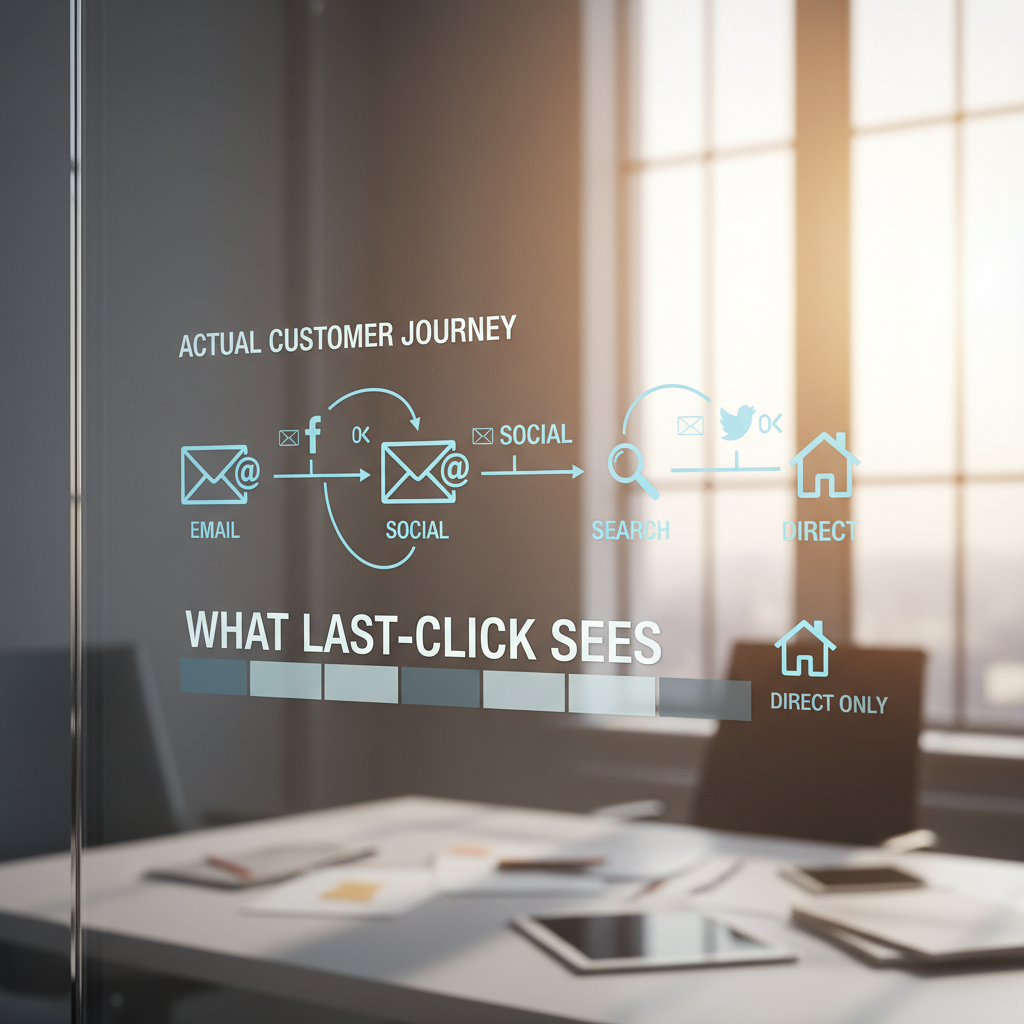
For years, the default setting in Google Analytics was "Last Non-Direct Click." This meant that if a customer read five of your emails, clicked through to a blog post, considered the product for a week, and then finally typed your URL into their browser to buy, email got zero credit.
This is the "Silent Revenue" problem. According to HubSpot's 2024 State of Marketing Report, for every $1 spent on email marketing, the average return is $36 to $40, delivering a staggering 3600% ROI. Yet, many marketers struggle to see this in their dashboards because the attribution model is flawed.
The Fallacy of Last-Click Attribution
Last-click attribution gives 100% of the conversion credit to the very final touchpoint. It’s simple, but it’s wrong. It incentivizes "bottom of the funnel" tactics like discount codes while penalizing the educational content that actually convinces the buyer to purchase.
— Ethan Shust, Sr. Growth Strategist (referenced by Triple Whale, 2025)
In my experience working with B2B clients, relying on last-click often leads to the cancellation of newsletter programs—the very programs that keep the brand top-of-mind during 6-month sales cycles.
The "Halo Effect" & Apple’s MPP
The landscape shifted dramatically with iOS 15 and Apple's Mail Privacy Protection (MPP). According to HubSpot and Litmus analysis (2024), open rates have artificially inflated to over 40% due to Apple pre-loading pixels. This means "Open Rate" is no longer a proxy for engagement.
This creates a "Halo Effect" where users see your subject line, get reminded of your brand, and then open a new tab to visit your site directly. Without a click, traditional models miss this entirely. This requires a shift toward conversion-based tracking and holdout testing, which we will discuss later.
The 6 Key Attribution Models for Email Marketers (Ranked by Utility)
Choosing the right model depends entirely on your business model. Are you selling impulse-buy sneakers (eCommerce) or enterprise software (B2B)? Here is the definitive breakdown.
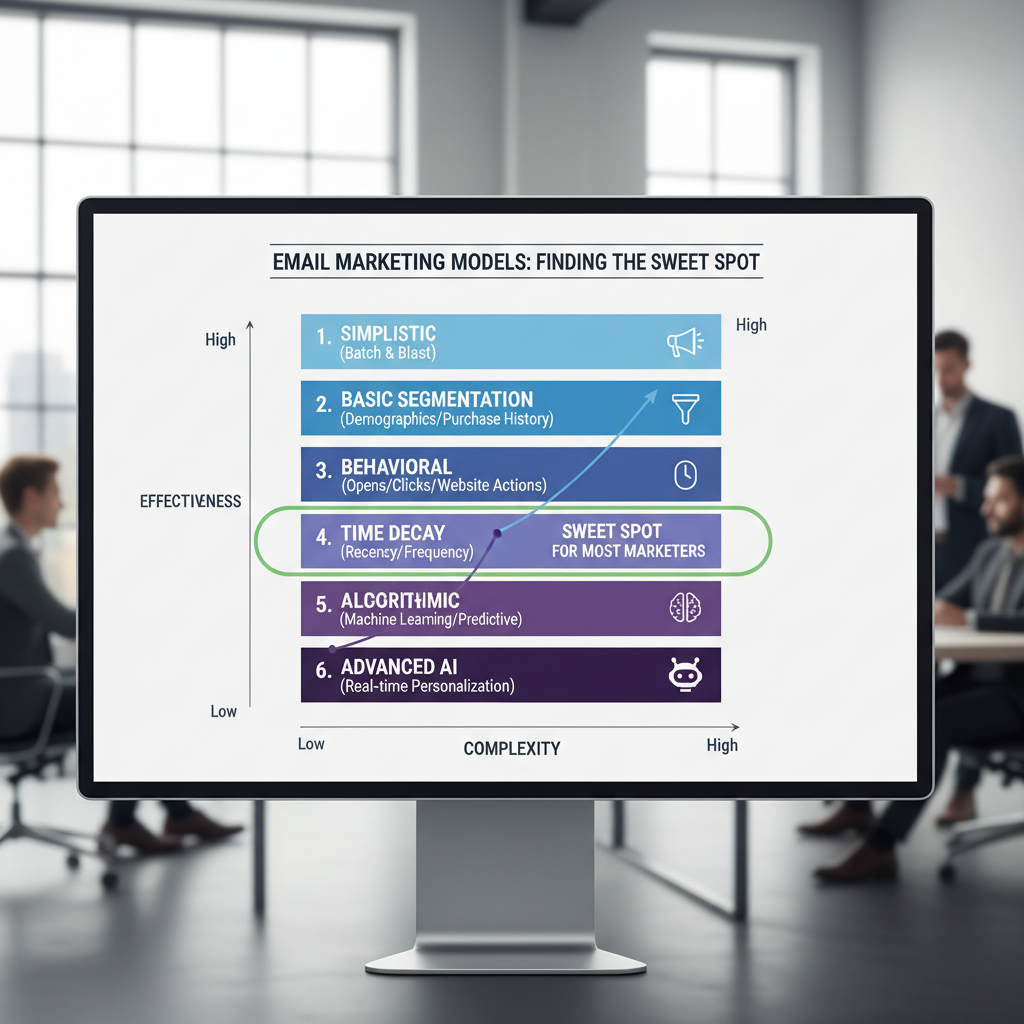
1. The Time-Decay Model (The Momentum Builder)
How it works: Credit is distributed to all touchpoints, but the touchpoints closer to the conversion get more credit. It assumes that the interaction happening immediately before the sale was more influential than the one three months ago.
- Best for: Short-cycle eCommerce and Retail.
- Why: If you send a "Last Chance" email and they buy, that email deserves the bulk of the credit, but the "New Arrivals" email sent last week still gets a nod.
2. The Linear Model (The Egalitarian Approach)
How it works: Every touchpoint in the journey gets equal credit. If a user interacts with 4 emails and 1 Google Ad, each gets 20% of the credit.
- Best for: Long B2B sales cycles where staying top-of-mind is the goal.
- Why: It acknowledges that the introductory "Welcome" email is just as vital as the "Book a Demo" email.
3. U-Shaped / Position-Based (The Balanced View)
How it works: It assigns 40% credit to the first touch (discovery), 40% to the lead creation touch, and splits the remaining 20% among the middle interactions.
- Best for: Growth marketing teams focused on lead generation and conversion.
- Insight: This is my personal favorite for SaaS companies because it rewards the marketing channel that brought them in and the one that converted them, without ignoring the nurturing in the middle.
4. W-Shaped Attribution
How it works: Similar to U-Shaped, but it adds a third pillar: "Opportunity Creation." It gives 30% to First Touch, 30% to Lead Creation, and 30% to Opportunity Creation.
- Best for: Complex B2B pipelines with sales teams.
- Why: It aligns marketing and sales data, proving that email marketing helped move a lead to a qualified opportunity.
5. Algorithmic / Data-Driven (The AI Solution)
How it works: It uses machine learning to compare the paths of customers who converted vs. those who didn't, assigning custom probability weights to each touchpoint.
- Best for: Enterprise companies with significant data volume.
- Status: This is the default in GA4. According to Ruler Analytics (2025), 75% of advanced companies are moving toward multi-touch and algorithmic models.
6. First-Touch (The Brand Builder)
How it works: 100% of the credit goes to the first interaction.
- Best for: List building campaigns.
- Warning: Do not use this for revenue reporting on email, as email is rarely the first time someone hears of a brand (unless it's a cold outreach or sponsored newsletter).
Case Study Deep Dives: Real World Attribution Wins
Theory is great, but results are better. Let's look at how shifting attribution models changed the game for real businesses.
eCommerce: Reclaiming 323% More Conversions
A US Shopify brand was struggling to justify their spend on Klaviyo. Their dashboard showed decent revenue, but Google Analytics showed almost nothing from email. They partnered with Swanky Agency to implement a full-funnel tracking system using specific UTMs and "Added to Cart" flows.
By moving away from Last-Click and trusting the data from their email service provider (ESP), they saw a 323% increase in attributed conversions and a 108% increase in revenue over 11 months. This proves that the data gap between GA4 and your ESP can be massive.
Source: Swanky Agency / Klaviyo Success Stories 2024
Source: DTF Digital Case Study, 2024
B2B Service: The Holiday Push
Mapplinks, working with a holiday e-commerce client, integrated SMS and Email using a "Time Decay" view. They needed to understand if early November emails were actually driving December sales.
The Time Decay model revealed that early educational emails had a high assisted conversion value. By optimizing these early touchpoints rather than just spamming "BUY NOW" in December, they generated $1M+ in revenue in 90 days.
Source: Mapplinks Klaviyo Case Study, Feb 2024
Technical Implementation: Setting Up Your Source of Truth
You cannot have a model without clean data. According to the Digital Marketing Institute, companies without proper attribution models misallocate up to 30% of their budgets. Here is how to stop the bleeding.
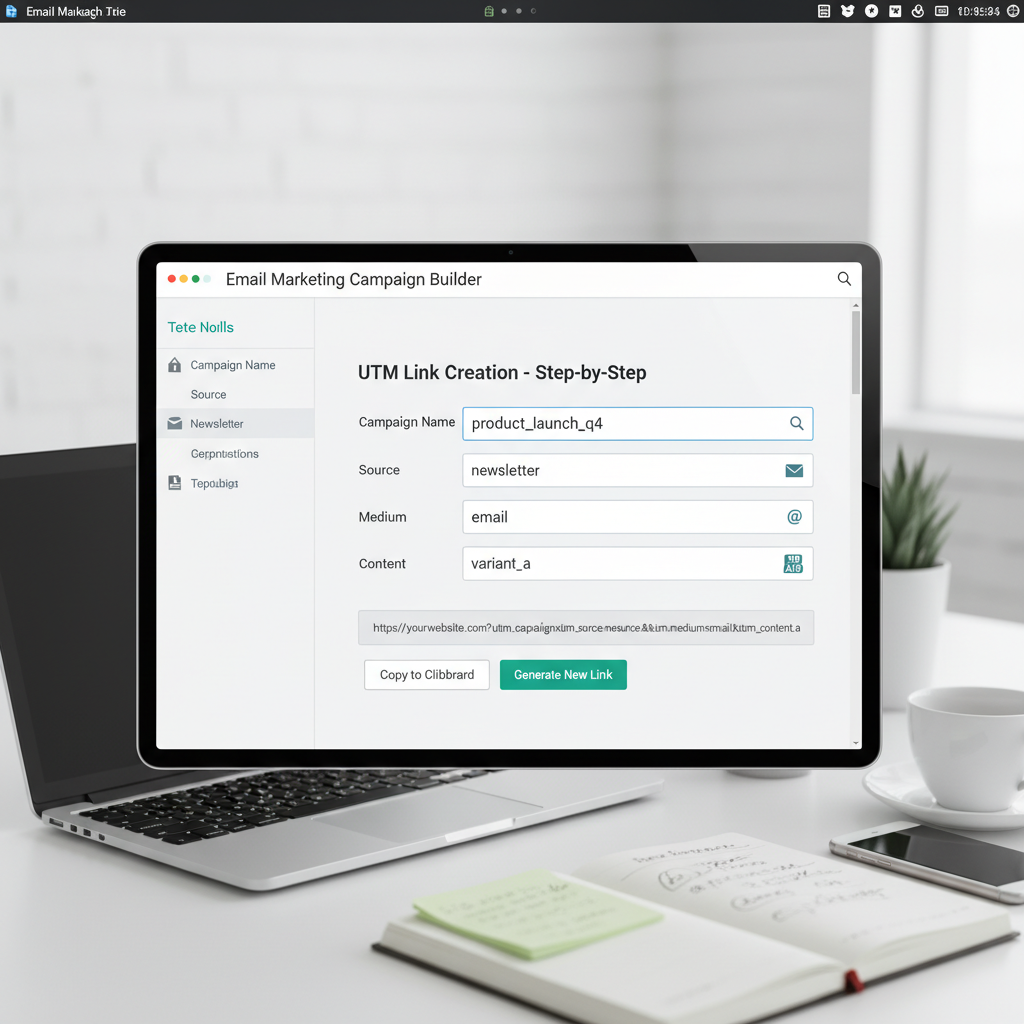
1. Granular UTM Tagging
If you aren't using UTM parameters on every single link in your emails, you are flying blind. Google Analytics 4 (GA4) needs these signals to categorize traffic.
- utm_source:
newsletterorlifecycle - utm_medium:
email - utm_campaign:
winter_sale_2025 - utm_content:
hero_image_vs_text_link(Use this to test what drives clicks)
2. The Triple Whale vs. GA4 Discrepancy
A common headache I see in 2025 is that third-party dashboards (like Triple Whale or Northbeam) show different numbers than GA4. Why?
GA4 relies heavily on cookies and modeling. Tools like Triple Whale use first-party pixel data and server-side tracking. My advice: Use your backend sales data (Shopify/WooCommerce) as the source of truth for total cash, and use GA4/Algorithmic models to determine the percentage split of credit.
3. Moving to First-Party Data
With third-party cookies crumbling, you must integrate your CRM (HubSpot/Salesforce) directly with your ad platforms and email tools. This is known as "Offline Conversion Import" or CAPI (Conversion API). It allows you to tell Google, "Hey, this user (hashed email) just bought something," bypassing the need for a browser cookie.
Navigating the Dark Funnel & View-Through Attribution
Here is where we get advanced. Most attribution models rely on a click. But what if someone opens your email, reads it, deletes it, and then goes to Google to search for your brand?
This is the Dark Funnel. Traditional models label this "Organic Search" or "Direct Traffic," stealing credit from email.
— Funnel.io Analysts, "Cracking the Messy Middle," 2024
How to Measure the Unmeasurable
To measure this "Halo Effect," you need to run Incrementality Tests (also known as Holdout Tests):
- Take 10% of your email list and put them in a "Control Group."
- Do not send them any marketing emails for 30 days.
- Send your normal campaigns to the other 90%.
- Compare the total revenue per user (from all channels) between the two groups.
If the emailed group spends $100 per person and the holdout group spends $80, you know that email marketing generates a 20% lift, even if the attribution software doesn't "see" the click.
FAQ: Solving Common Attribution Headaches
Q: How do I track email revenue in GA4?
A: GA4 defaults to "Data-Driven" attribution. To see email specifically, go to Advertising > Attribution > Model Comparison. Ensure your emails are tagged with utm_medium=email. If you don't tag, GA4 dumps them into "Direct" or "Referral," and you lose the data.
Q: Does opening an email count as a conversion?
A: No. Since Apple's MPP update, opens are unreliable. A conversion should only be counted when a user completes a desired action on your site (purchase, form fill). Do not optimize for opens; optimize for clicks and downstream revenue.
Q: What is a reasonable lookback window for email?
A: For B2C retail, a 5-7 day window is standard. If they haven't bought a week after the click, the email probably wasn't the main driver. For B2B, set the window to 30-90 days to account for longer decision-making processes.
Conclusion: Choosing Your Framework
There is no "perfect" attribution model. There is only the model that is least wrong for your specific business goals. If you are selling high-ticket B2B services, the W-Shaped model gives you the visibility you need on lead generation. If you are in fast-paced retail, Time-Decay respects the urgency of your promotions.
However, one thing is certain: Last-Click is dead.
According to Ruler Analytics, 45% of marketers still do not trust their data. Don't be one of them. By sticking to a single-touch model, you are likely underreporting your email revenue by at least 20%, leaving budget on the table and giving too much credit to paid search.
Your Next Step: Audit your current reporting setup today. Are you using UTMs consistently? Are you comparing GA4 data against your backend sales? Start there. The tools to measure the true impact of email are available; you just have to turn them on.